
Introduction: Choose for RFQ Clarity, Not Only for Price
When overseas buyers search for a fiber optic cable supplier China, many pages look similar at first glance. They may show product photos, broad product names and a contact form. For a real B2B buyer, that is not enough. A distributor needs repeatable SKUs and stable packing. A telecom contractor needs cable, splitter, pigtail, ODF and terminal accessories that match one project. An ISP may need a connected FTTH BOM. A data center cabling team may care more about MTP/MPO polarity, fiber count and patch-panel relationship than a generic product headline.
The purpose of this guide is to help buyers evaluate a supplier or sourcing partner before sending a purchase inquiry. A good RFQ should make the quotation easier, not create more guessing. The supplier should understand product category, application, specification, packing, inspection requirement and destination. The buyer should also avoid comparing offers that are based on different cable structures, fiber types, connector polish, jacket material or packing rules.
Lumafyn approaches this topic as a China fiber optic sourcing partner for global B2B buyers. The website does not publish unsupported claims about factory ownership, certificates, production capacity, stock or delivery speed. Instead, the goal is to organize product choices, factory references, quality-control requirements and RFQ fields so the buyer can move from search to quote in a cleaner way.
1. Confirm the Supplier's Product Scope
Fiber optic procurement is rarely limited to one isolated product. A buyer searching for fiber optic cable may also need patch cords, pigtails, adapters, PLC splitters, ODF panels, terminal boxes, fast connectors, AOC/DAC cables or MTP/MPO assemblies. If each item is handled separately, the project communication becomes slower and the risk of mismatched interfaces increases.
Start by checking whether the supplier can discuss the whole application. For FTTH, the scope may include drop cable, PLC splitter, fast connector, fiber access terminal, pigtail, adapter and ODF. For telecom ODN, it may include rack panels, patch cords, splitters, splice-related accessories and labeling. For data centers, it may include MTP/MPO trunk cables, harness cables, LC uniboot patch cords, cassettes, high-density patch panels, transceivers and AOC/DAC options.
A supplier does not need to claim that every product is made under one roof. What matters is whether the supplier can review the connected BOM and quote each item with clear specifications. This is especially important for distributors and contractors who need to reduce back-and-forth communication before placing an order.
2. Ask for Specification Discipline
A serious fiber optic supplier should guide the buyer toward complete specifications. Vague terms such as “fiber cable,” “LC patch cord” or “MPO cable” are not enough for accurate quotation. For cable, buyers should state indoor or outdoor application, fiber count, fiber type, cable structure, jacket material, tensile requirement where relevant, length, color, quantity and packing. For patch cords, buyers should state connector type, polish type, fiber mode, cable diameter, jacket, length, color and quantity by line item.
For MTP/MPO products, the RFQ should include fiber count, connector gender when required, polarity method, trunk or harness type, endpoint labels and application environment. For PLC splitters, the split ratio, package type, connector type, fiber length and installation location are important. For ODF and patch panels, port count, rack size, adapter type and cable-management needs should be checked.
A supplier that accepts a vague request too quickly may still quote something, but the quote may not match the project. A better partner asks clarification questions early and helps the buyer structure the line schedule.
3. Review Factory and Production References Carefully
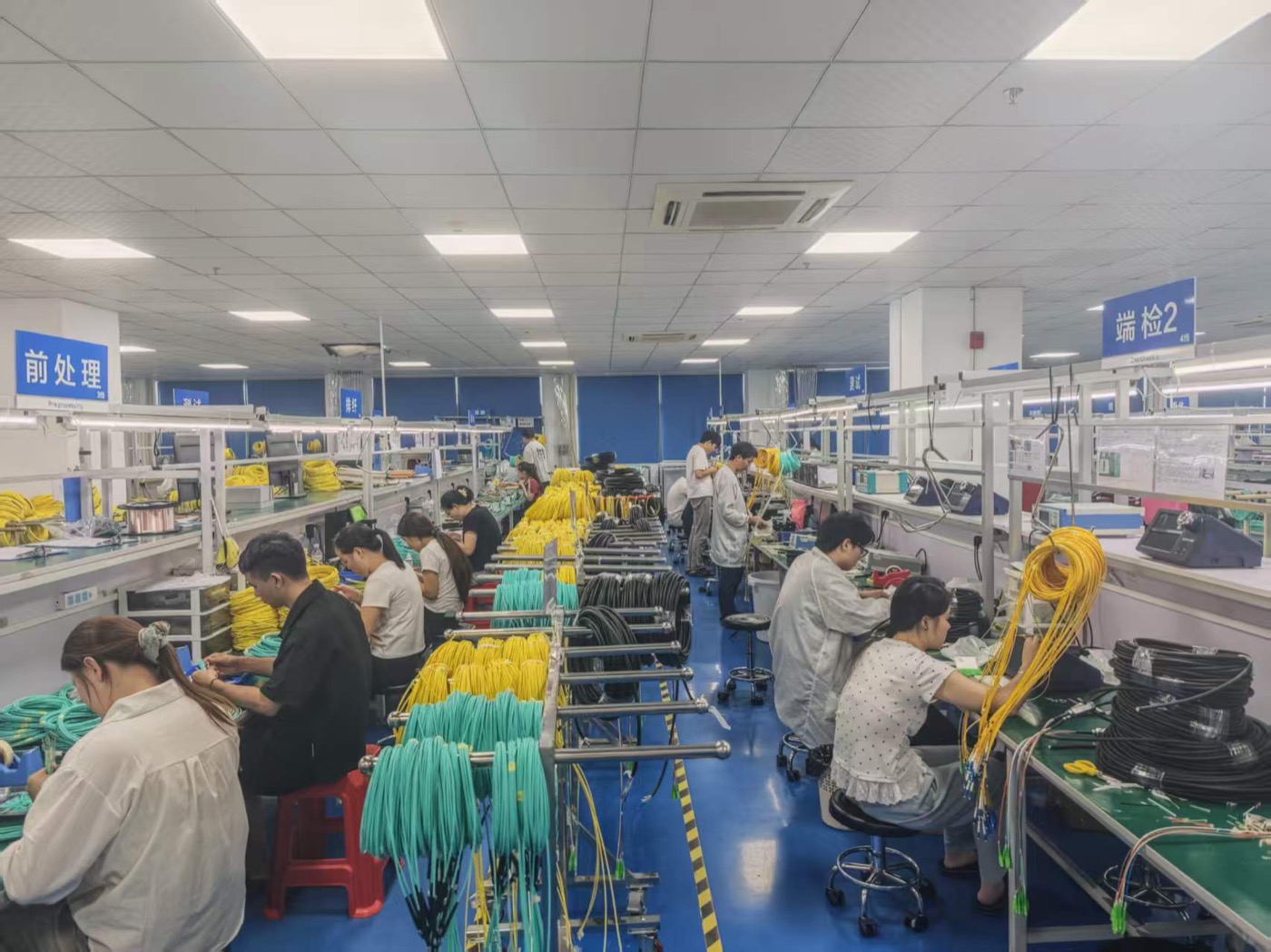
Factory photos can build trust, but buyers should use them as workflow references rather than as proof of every claim. Useful factory references show production line workflow, cable cutting, patch cord preparation, connector assembly, end-face inspection, work-in-progress racks, packing area and sample display. These images help a buyer understand whether the supplier is familiar with the product category and whether the website is supported by real production-related material.
Lumafyn uses real factory photo references on the website, including patch cord assembly workflow, cable preparation, end-face inspection and packing. The safer way to use these photos is to connect them to RFQ questions. For example, a buyer can ask whether end-face inspection photos are needed, whether label confirmation is required before packing, or whether a pre-shipment photo set should include cartons, product labels and cable coils.
Do not rely only on a hero image or a decorative factory page. The photos should support the buying process. They should make it easier to ask the right questions, not replace actual product specifications or quality requirements.
4. Check the Quality-Control Process
Quality control is one of the most important differences between a casual trading page and a serious B2B sourcing path. Fiber optic products can look similar in photos, but the buyer may care about connector end-face cleanliness, insertion loss, return loss, cable length accuracy, connector type, jacket marking, color, packing, label and carton quantity.
Before buying, ask what inspection points are relevant to the product. A patch cord order may need connector review and optical test requirements. A MTP/MPO cable order may need polarity confirmation and endpoint labels. A PLC splitter order may need ratio, package type and connector details. A project shipment may need pre-shipment photo confirmation so the buyer can check labels and quantities before goods leave.
The supplier should not publish test values or certification claims without evidence. Instead, the RFQ should define which inspection details are required for the specific order. This protects both buyer and supplier because expectations are clear before quotation and production.
5. Evaluate OEM and Packaging Support
Many overseas buyers are not only purchasing products; they are building a resale line, project package or private-label SKU system. If you need OEM fiber optic products, ask about custom cable length, connector options, cable color, label design, package design, carton marks, buyer part number and BOM-based quotation. These details affect quotation, packing workflow and documentation.
Private label support should be discussed early. If the supplier prepares a standard quotation and the buyer later requests special packaging, SKU labels or carton marks, the price and lead process may change. For distributors, it is better to send label examples, packing preference and carton quantity expectation during the first RFQ.
For Lumafyn RFQs, buyers can use the OEM service page to organize connector options, fiber type, cable length, label design and packaging design before sending requirements. This keeps custom work tied to real buyer needs instead of generic marketing language.
6. Compare Communication Quality
Communication quality is part of supplier reliability. A good supplier response should confirm what the buyer asked, highlight missing details, separate uncertain fields, and suggest the next step. A weak response may only say “yes, we can supply” without asking any technical or commercial questions.
For global buyers, time zone, English clarity, document handling and response structure matter. The supplier should be able to understand a drawing, old SKU, photo reference, product list or BOM. If a file is missing details, the supplier should identify the gap. For example, if a patch cord RFQ includes connector type and quantity but no polish or length, that should be clarified before quotation.
Fast communication is useful, but do not confuse fast replies with accurate quotations. A reliable RFQ process is clear, repeatable and documented.
7. Use a Supplier Checklist Before You Send the RFQ
The checklist below helps buyers compare suppliers and also prepare better inquiries. It is designed for global distributors, telecom contractors, ISPs, system integrators, data center cabling teams and sourcing companies.
8. Prepare a Better Fiber Optic Cable RFQ
A strong RFQ can save several rounds of email. For cable products, include application, cable type, fiber count, fiber mode, jacket, length, color, quantity, packing and destination country. For patch cords, add connector A, connector B, polish type, fiber mode, cable diameter, length, color, quantity and package needs. For connected projects, include all related items in one table so the supplier understands the whole application.
If you already have an old supplier SKU, catalog page, drawing or sample photo, include it. If you have a target market requirement, state it clearly. If you need private label, put it in the first message. If you need inspection photos or packing photos, ask before quotation so the supplier can plan the process.
9. Internal Links for the Next Step
If you are preparing a quotation, review the related Lumafyn pages below. They are organized to move from buyer education to product selection and then to RFQ.
Conclusion: Build a Quote-Ready Sourcing Path
Choosing a reliable fiber optic cable supplier in China is not only about finding a low price. It is about building a quote-ready sourcing path: clear product scope, complete specifications, relevant factory references, product-specific quality control, OEM and packaging clarity, and professional communication. When these parts are prepared before quotation, overseas buyers can compare offers more accurately and suppliers can respond with fewer assumptions.
Need Fiber Optic Solution? Contact Lumafyn Today. Send your product list, specification, quantity, destination country and any drawing or BOM file so Lumafyn can review the RFQ path and help prepare a clearer fiber optic sourcing request.