Buyer Guide · Cable Assemblies

Fiber Optic Cable Assemblies Selection Guide: Types, Specifications and RFQ Lines

Fiber optic cable assemblies are fiber cables with connectors fitted and tested at the factory: patch cords, pigtails, MTP/MPO trunks, branch harnesses and custom pre-terminated cables. Choosing one is mostly about writing down what it connects: the two endpoints, the connector at each end, the fiber, the cable construction and the length. This guide compares the assembly families, lists the fields a supplier needs for a firm quotation, explains which test results to ask for and shows a line format that keeps revisions traceable.

Published 2026-10-28 · Updated 2026-11-10 · By the Lumafyn Technical Team

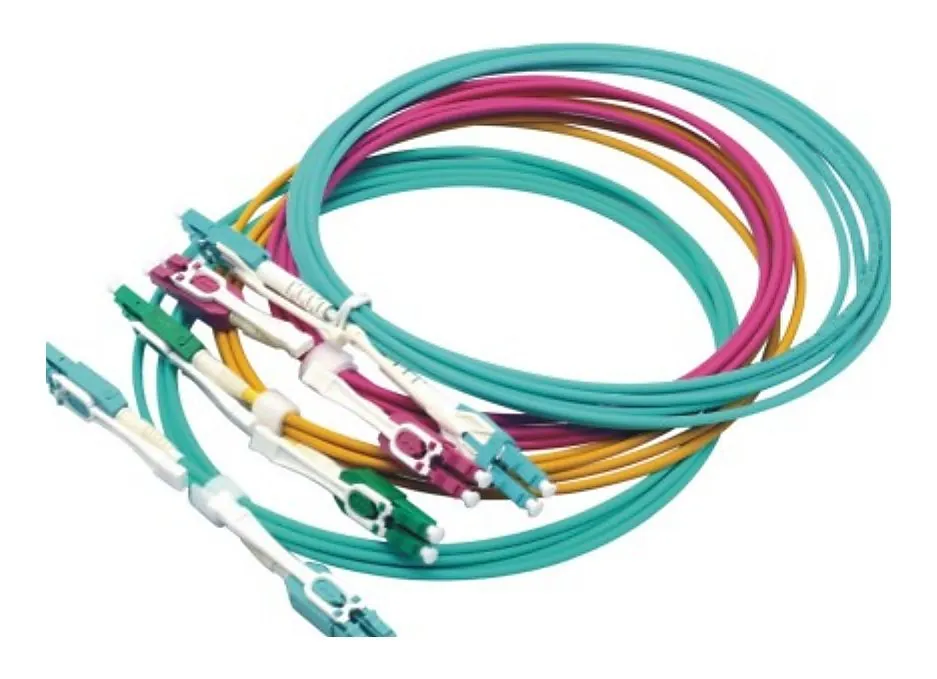
Coiled fiber optic patch cords with duplex connectors

Types of Fiber Optic Cable Assemblies

Most fiber optic cable assemblies fall into a small number of families. The family decides which fields matter, so name it first on every line.

Common cable assembly families
FamilyConstructionTypical use
Patch cord (jumper)Simplex or duplex cable, connectors on both endsEquipment to panel, panel to panel cross-connects
PigtailConnector on one end, bare fiber on the otherSpliced into trays inside ODFs, closures and boxes
MTP/MPO trunkMulti-fiber cable with MTP/MPO on both endsBackbone links between high-density panels
Branch harness / breakoutMTP/MPO on one end, several LC or SC legs on the otherPanel to equipment, or a trunk to duplex ports
Fanout assemblyMulti-fiber cable broken out to individually jacketed legsSplice-free termination of multi-fiber cable
Custom pre-terminated cableIndoor/outdoor or armored cable terminated to lengthBuilding risers, campus links, drop installations

The same connector pair can belong to different families. "LC to LC" can be a 2 m duplex jumper or a 24-fiber pre-terminated breakout cable, so the family has to be stated along with the connectors.

Specification Fields for Each Assembly

A quotation is only comparable when each line describes the same physical product. These are the fields we ask for on each line.

Cable assembly specification fields
FieldWhat to stateWhy it matters
End A / End BConnector type (LC, SC, FC, ST, MTP/MPO), polish (UPC/APC) and, for MTP/MPO, pinned or unpinnedMismatched polish or gender cannot be mated
FiberOS2 singlemode, OM3/OM4/OM5 multimode, or a fiber standard such as G.652.D or G.657.A1Sets loss, reach and bend performance
Fiber countSimplex, duplex, 8, 12, 24 or another countMust match the port and panel plan
Cable constructionDiameter, jacket material, indoor/outdoor, armorRouting space and building rules
Length and toleranceLength per line, tolerance if critical, breakout leg lengthsWrong lengths are the most common re-order
Polarity or mappingA-B duplex, MTP/MPO method or the project drawingA polarity error is invisible until the link fails
Labels and packingLabel text and position, bag or reel, carton marksNeeded for site installation and OEM programs
LC uniboot duplex fiber patch cord connectors

How to Choose Between Assembly Types

  1. Start with the endpoints. Write the two things the assembly connects: a switch port, a panel position, a cassette, a splice tray or a building entry.
  2. Count the fibers between them. Two fibers usually means a duplex patch cord. Eight or more between the same two points is where MTP/MPO trunks or pre-terminated cables save space and installation time.
  3. Decide where the connector ends. If one end will be spliced, the right product is a pigtail or a fanout, not a patch cord cut in half.
  4. Check the route. Indoor trays, outdoor ducts and risers need different jackets and sometimes armor. Note the pulling method if the cable will be pulled through conduit.
  5. Confirm polarity or mapping. For duplex links state A-to-B; for multi-fiber links state the method or attach the channel drawing.

If two options seem to fit, choose the one with fewer mated connections in the channel: each mated pair adds loss and another surface to clean.

Factory Test Items to Request

Ask for test results per assembly or per fiber, not only a statement that products are tested. The items below are common in cable assembly test reports; the acceptance values should come from your design or from the standard your project uses.

Common cable assembly test items
Test itemWhat it shows
Insertion loss (IL)Loss of the mated connection at the stated wavelength
Return loss (RL)Back-reflection; APC connectors are used where low reflection is required
End-face inspectionScratches, pits and contamination on the ferrule end face, often assessed against IEC 61300-3-35
Polarity or continuity checkThat each fiber arrives at the intended position
Geometry (interferometer)Radius of curvature, apex offset and fiber height for polished ferrules, where specified
Length checkThat the delivered length matches the line schedule
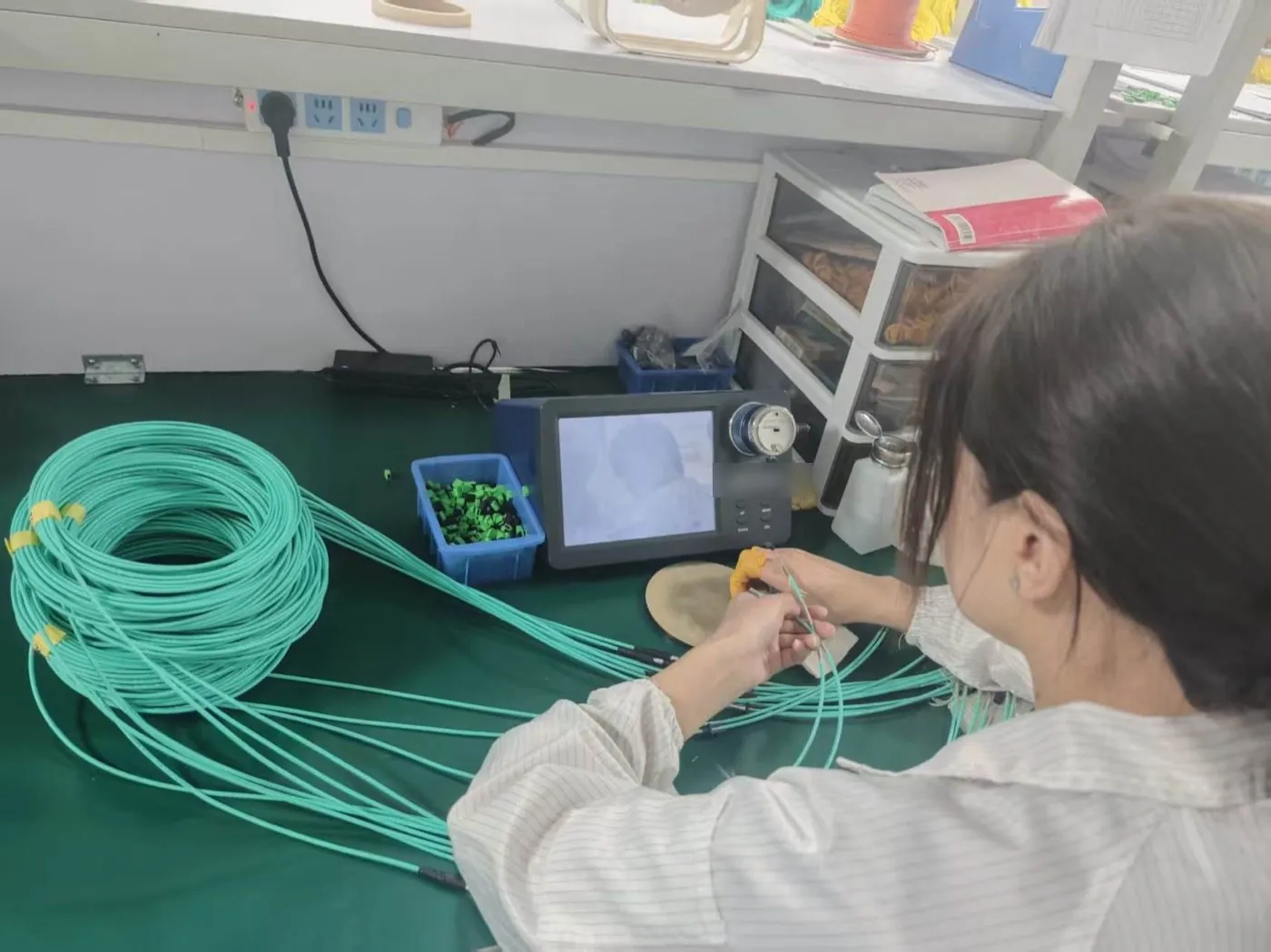
End-face inspection workbench with a fiber microscope in our own factory

A Quote-Ready Cable Assembly Line Format

Give each configuration its own line. Grouping different lengths, colors or polarity types on one line is the most common reason quotations differ between suppliers.

Cable assembly RFQ line format
FieldExample
Line ID and BOM revisionASM-07, Rev B, 2026-11-03
FamilyBranch harness
End AMTP/MPO-12, unpinned, UPC
End B6 × LC/UPC duplex
Fiber and countOM4, 12 fibers
Cable and length3.0 mm LSZH round cable, 5 m trunk section, 0.5 m legs
Polarity/mappingMethod per drawing DC-14 Rev 2
EndpointsPanel P-03 slot 4 to switch S-12 ports 1–6
Labels, packing, quantityBoth-end labels per schedule, individual bags, 48 pcs

Mark any field you cannot confirm yet as "to be confirmed" so it is settled before the price is fixed. Keep the BOM revision and date on every line; when a drawing changes, issue a new revision rather than editing quantities in an email thread.

Keep the BOM Traceable Through Revisions

  • One line ID per configuration. Keep it stable across revisions so quotations, samples and shipments can be matched.
  • Revision note on change. Record what changed (length, connector, polarity, quantity) and the date.
  • Connected lines. Note which panel, cassette, adapter or transceiver lines an assembly connects to, so a change on one side triggers a check on the other.
  • Handover record. At delivery, match labels, test reports and packing lists to the line IDs.

Common Mistakes in Cable Assembly Requests

  • Connector without polish. "SC" can be UPC or APC; the two must not be mated.
  • MTP/MPO without gender. Two pinned or two unpinned plugs cannot be connected through an adapter.
  • One length for all legs. Harness and fanout legs often need different lengths.
  • No polarity reference. A cable described only as "MPO 12F" can be built in more than one way.
  • Product names instead of endpoints. Without the endpoints nobody can check that the assembly fits the channel.

FAQ

Fiber Optic Cable Assemblies FAQ

What are fiber optic cable assemblies?

They are fiber cables with connectors fitted and tested before delivery, such as patch cords, pigtails, MTP/MPO trunks, branch harnesses, fanouts and custom pre-terminated cables.

What is the difference between a patch cord and a pigtail?

A patch cord has connectors on both ends and is plugged between ports. A pigtail has a connector on one end only; the bare end is spliced inside an ODF, closure or box.

When should I use an MTP/MPO trunk instead of duplex patch cords?

When many fibers run between the same two locations, such as panel to panel in a data center. A trunk carries 8, 12, 24 or more fibers in one cable and reduces installation time and tray space.

Which test results should come with cable assemblies?

Insertion loss and return loss per connector, end-face inspection, a polarity or continuity check and, where specified, interferometer geometry. Agree the acceptance values before ordering.

What do you need to quote custom fiber optic cable assemblies?

For each line: family, connectors and polish at both ends, fiber type and count, cable construction, lengths, polarity or mapping, endpoints, labels, packing and quantity, plus the BOM revision.

Sources and Further Reading

Standards and public references describe definitions and industry practice; they are not Lumafyn product data. Optical values, MOQ and lead time for your order are confirmed in your quotation and test records.

Related products and guides

Get a Quote