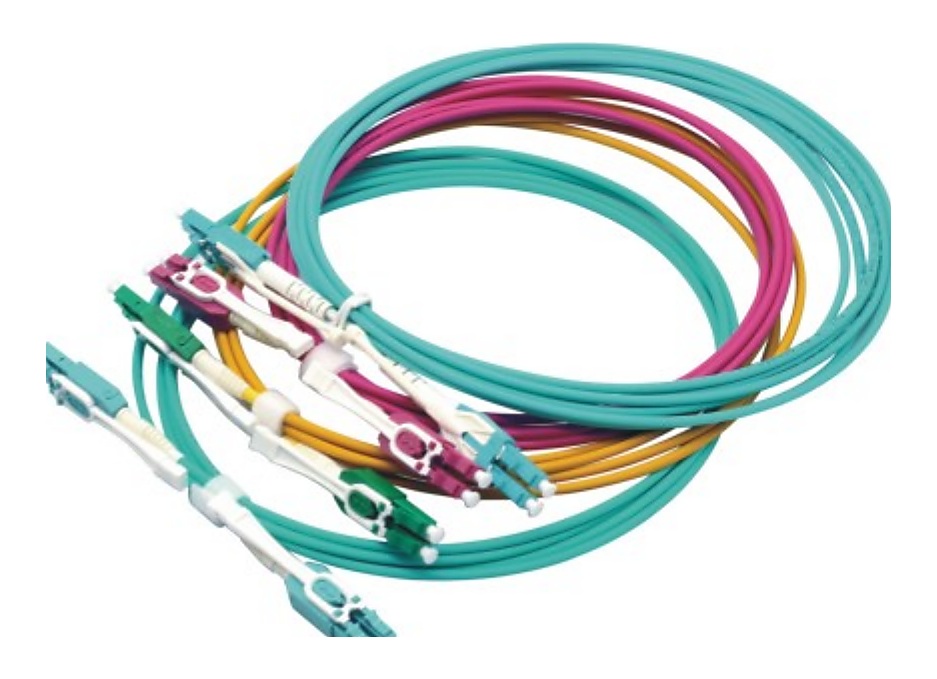
High-Density Patch Cords

LC Uniboot Patch Cord Supplier for High-Density Data Center Racks

An LC uniboot patch cord carries both fibers of a duplex link in one round cable that ends in a single boot holding two LC connectors. It takes less space than a standard zip-cord duplex LC, which matters at dense switch, cassette and patch-panel ports. As an LC uniboot patch cord supplier, Lumafyn sources OS2, OM3 and OM4 uniboot cords, LC to LC or LC to other connectors, in your lengths, polarity, jacket color and labels.

Last reviewed 2026-11-10 by the Lumafyn team · Orders are produced in our own factory in China.

LC uniboot patch cord with two LC connectors in a single boot

Why Buyers Choose LC Uniboot

In a 48-port 1RU panel or a fully populated switch, two zip-cord cables per port quickly become a wall of cable that blocks airflow and labels. A uniboot cord halves the number of cables at the port and keeps both connectors in one body, so moves and changes are cleaner. The connector is still a standard LC, so nothing changes on the equipment side.

Where LC Uniboot Fits

  • Top-of-rack and spine switch patching with SFP+, SFP28 and other LC-duplex optics
  • MPO/MTP cassettes and LC patch panels in data center rows
  • Telecom equipment rooms where cable management space is limited
  • Distributor ranges for data center resellers
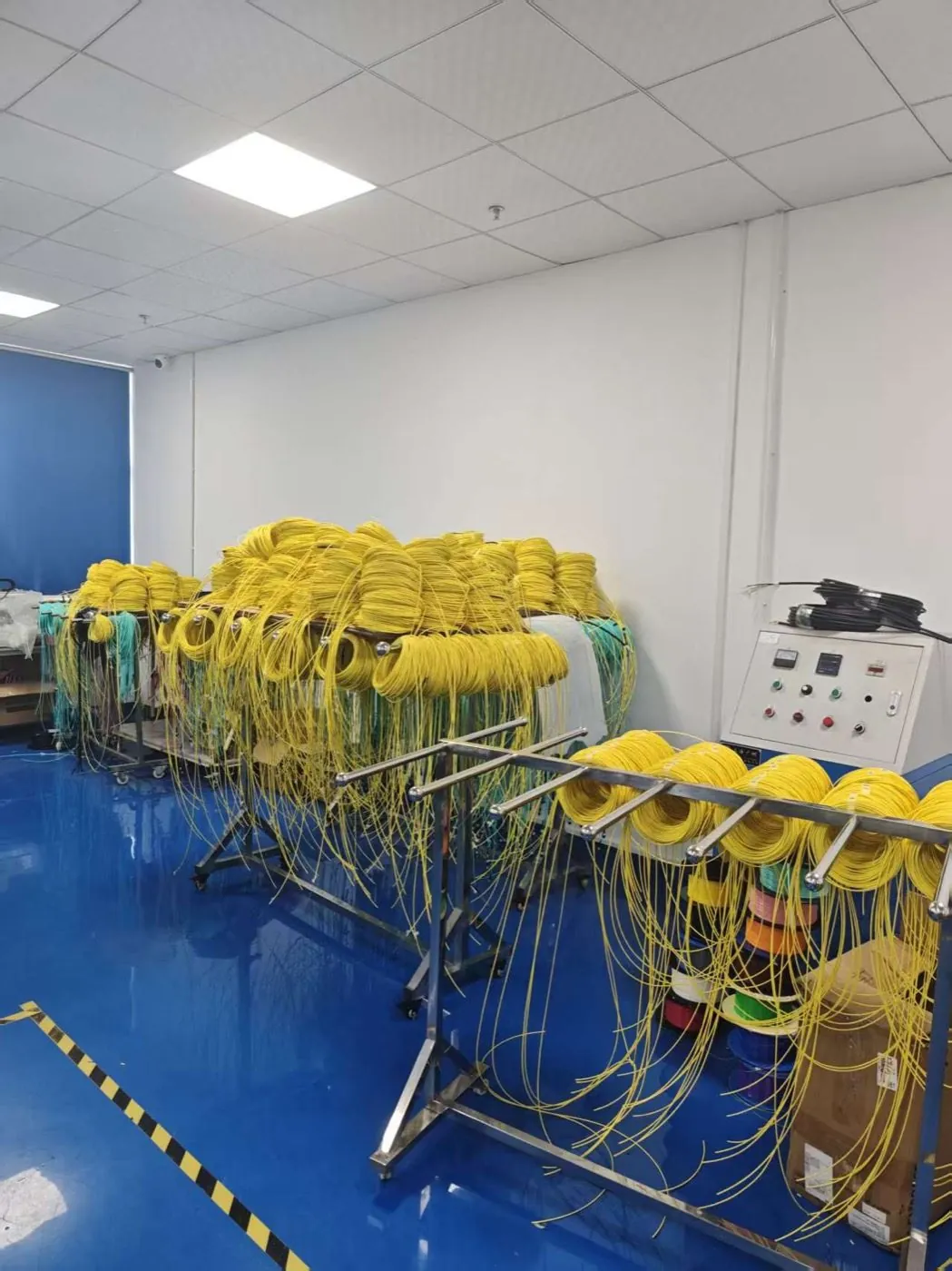
Yellow fiber patch cords hanging on work-in-process racks next to test equipment
In-house production reference: patch cords on work-in-progress racks before inspection and packing.

Compare

LC Uniboot vs Standard LC Duplex, and What to Specify

ANSI/TIA-568.3-D defines duplex patch cords as A-to-B so transmit meets receive. Keep that unless your design states otherwise.

LC uniboot vs standard LC duplex patch cords
FieldLC unibootStandard LC duplex
CableOne round cable, two fibersTwo cables in zip-cord
BootOne boot for both connectorsOne boot per connector
Space at the portLess cable bulkMore cable bulk
Polarity changeOften reversible in the field (model-dependent)Re-clip or re-order
Typical useDense switch, cassette and panel portsGeneral patching
Connector interfaceStandard LCStandard LC
LC uniboot patch cord fields
FieldCommon optionsNotes
EndsLC uniboot to LC uniboot; LC uniboot to LC duplex, SC or otherSpecify each end
FiberOS2 (G.652.D / G.657), OM3, OM4Match the transceiver
PolishUPC; APC on requestDo not mate APC with UPC
PolarityA-to-B (standard) or A-to-AState per line
Cable diameter2.0 / 3.0 mm or as specifiedRound uniboot cable
Jacket and colorPVC / LSZH; yellow, aqua, violet or project colorColor can code the network
Length1, 2, 3, 5 m or customPer line, with tolerance
LabelsFlag or heat-shrink, your textMatch the port map

Before You Order

Checks for a High-Density Uniboot Order

Port pitch

Confirm the boot and push-pull tab fit the port spacing on your switch or panel.

Polarity method

Write A-to-B or A-to-A per line and, if needed, how field reversal should be handled.

Fiber type

OS2 for singlemode optics, OM3 or OM4 for SR optics. Do not mix modes in one link.

Testing

Request insertion loss, return loss and end-face inspection (IEC 61300-3-35) records; limits are agreed in the quotation.

FAQ

LC Uniboot Patch Cord Questions

What is the difference between LC uniboot and standard LC duplex?

A standard duplex LC uses two cables joined as zip-cord with two boots; a uniboot uses one round cable carrying both fibers and one boot. Uniboot reduces cable count and bulk at the port, which helps airflow and access in dense racks.

Can the polarity of a uniboot cord be reversed?

Many uniboot designs let the installer swap the two fibers without tools. Whether the quoted model does, and how, is confirmed in the quotation; otherwise specify A-to-B or A-to-A per line.

Which fiber types are available for LC uniboot?

OS2 singlemode (G.652.D or G.657) and OM3 or OM4 multimode, in UPC polish; LC/APC uniboot can be requested where the link needs it.

Do uniboot cords work with any LC port?

Yes. The connector interface is a standard LC (IEC 61754-20), so it mates with standard LC adapters and transceivers. Check the boot and tab clearance on very tight port pitches.

What should a uniboot RFQ include?

Connector ends, fiber type, polarity, cable diameter, jacket and color, length, quantity, labels and packing, and the destination country.

Get a Quote