Buyer Guide · Fire Ratings

LSZH vs PVC vs OFNR vs OFNP: Choosing a Patch Cord Jacket for North America and Europe

A patch cord jacket is described in two different ways that are often mixed up. PVC and LSZH name the jacket material. OFNR, OFNP and OFNG are North American fire listings under NFPA 70 (the NEC) Article 770, earned by passing a flame test: UL 1666 for riser, NFPA 262 for plenum. In Europe, LSZH is checked with IEC 60332, IEC 60754 and IEC 61034, and installed cable carries a CPR Euroclass. So "LSZH" does not mean "plenum rated", and "OFNR" does not say what the jacket is made of. Order the listing the site requires in North America and the LSZH tests (plus any Euroclass for the cable) in Europe.

Published 2026-11-12 · Updated 2026-11-12 · By the Lumafyn Technical Team

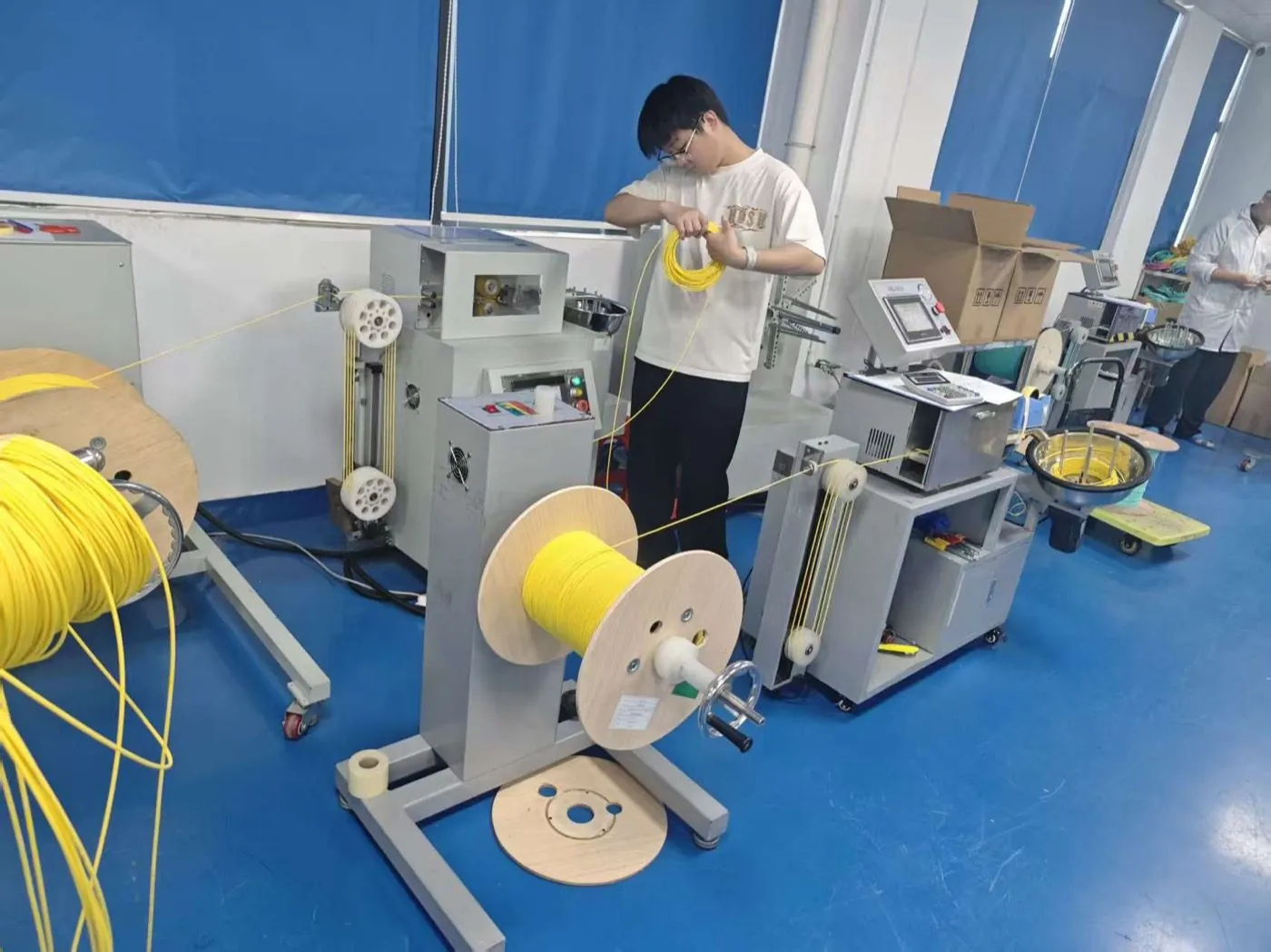
Worker preparing yellow fiber cable from a spool at a cable cutting machine

Material Names and Fire Listings Are Different Things

Buyers see four terms on drawings and quotations, but they answer two different questions:

  • What is the jacket made of? PVC (polyvinyl chloride) or LSZH (low smoke zero halogen, also written LS0H, LSOH or LSHF). Plenum cables often use special low-smoke PVC or fluoropolymer compounds.
  • Which fire test has the finished cable passed, and where may it be installed? In the United States and Canada this is a listing such as OFNP, OFNR or OFNG, printed on the jacket. In the EU, cable for permanent installation carries a CPR Euroclass such as Dca or Cca.

A cord can be "PVC, OFNR" or "LSZH, OFNR", and an LSZH cord can have no North American listing at all. That is why an RFQ line that says only "LSZH" or only "riser" is incomplete for a project that crosses both markets.
LSZH vs PVC vs OFNR vs OFNP at a Glance

Patch cord jacket terms compared (from NFPA 70 Article 770, UL, NFPA and IEC test standards)
TermWhat it isTest basisWhere it is usually asked for
PVCJacket material; contains chlorineNo fire rating by itself; a PVC cable can be tested to any listingGeneral indoor use; many North American riser and general-purpose cords
LSZHHalogen-free, low-smoke jacket materialIEC 60754-1/-2 (halogen, acidity), IEC 61034-2 (smoke), IEC 60332 (flame spread)Europe, Middle East, Asia-Pacific, tunnels, rail and public buildings
OFNG / OFNNEC general-purpose listing, nonconductiveVertical tray test (UL 1685 or UL 1581); OFNG also meets CSA FT4Horizontal runs on one floor, not in risers or plenums
OFNRNEC riser listing, nonconductiveUL 1666 vertical shaft testVertical runs between floors; also accepted where OFNG is required
OFNPNEC plenum listing, nonconductiveNFPA 262 Steiner tunnel test (formerly UL 910)Air-handling spaces such as ceiling plenums and some raised floors
OFCR / OFCPConductive versions (metallic parts, for example armor)Same tests as OFNR / OFNPArmored cords and cables with metallic members

The "N" means nonconductive (no metal) and the "C" means conductive. Most standard fiber patch cords are nonconductive; an armored cord with a steel tube falls in the conductive family. See armored vs standard patch cords for that case.

North America: NEC Article 770 and the Substitution Rule

NFPA 70, the National Electrical Code, covers optical fiber cables in buildings in Article 770. Cables are listed by application, and the code allows a higher listing to replace a lower one, never the reverse:

  1. OFNP (plenum) may be used anywhere OFNR, OFNG or OFN is required.
  2. OFNR (riser) may be used where OFNG or OFN is required, but not in a plenum.
  3. OFNG and OFN (general purpose) are for single-floor runs outside risers and plenums.

Some cables also carry a limited-smoke suffix, for example OFNR-LS or OFN-LS, now also marked ST1 by UL. It means the cable passed smoke limits in the UL 1685 vertical-tray test. It is a smoke property, not a location rating, and an OFNR-LS cord still cannot replace OFNP.

In Canada, the Canadian Electrical Code uses CSA FT ratings. FT6 corresponds to the plenum test and FT4 to the vertical-tray test, so cords sold into both countries are often marked with both, for example "OFNP (UL) FT6". The authority having jurisdiction on each site makes the final call on what is accepted, and some US data center and enterprise specifications require listed cords even inside equipment rooms.

What the North American Flame Tests Measure

Pass criteria of the riser and plenum tests (as summarized by UL Solutions and cable makers)
TestListingSetupPass criteria
NFPA 262OFNP, OFCPHorizontal Steiner tunnel with forced airflow, 20 min burnFlame travel max. 5 ft (1.52 m); peak optical smoke density max. 0.50; average optical density max. 0.15
UL 1666OFNR, OFCRVertical two-storey shaft, 30 min burnFlame must not reach 12 ft (3.66 m) above the burner; temperature at 12 ft max. 850 °F (454 °C)
UL 1685OFNG, OFN; -LS suffixVertical cable trayLimited char height; smoke limits apply for the LS / ST1 suffix

The plenum test is the only one of the three that limits smoke for the basic listing, because smoke in an air-handling space spreads through the building's ventilation. That is why OFNP cords cost more: the compounds that pass NFPA 262 are more expensive than standard PVC or LSZH.

Europe and International: What Makes a Jacket LSZH

"LSZH" is a material claim, and in IEC markets it is checked with a group of tests on the jacket compound and the finished cable. The values below are the limits most often written into cable specifications; check the project documents, because some operators set stricter numbers.

Common LSZH test requirements
StandardWhat it checksTypical requirement
IEC 60754-1Halogen acid gas contentNot more than 5 mg/g (0.5%) expressed as HCl
IEC 60754-2Acidity and conductivity of combustion gasespH at least 4.3 and conductivity not more than 10 µS/mm
IEC 61034-2Smoke density in a 3 m cubeLight transmittance at least 60% is the usual specification value
IEC 60332-1-2Flame spread on a single vertical cableCharring must stop at least 50 mm below the top clamp
IEC 60332-3 (categories A to D)Flame spread on bunched cablesChar height limit for the chosen category; used for cable rather than single cords

PVC fails the halogen tests by design, because chlorine is part of the polymer; that is the main reason European and public-transport projects specify LSZH. Halogen-free smoke is less corrosive to electronics and less toxic, which matters in data centers, tunnels and buildings with many occupants.

For installed cable in the EU, the reaction-to-fire class under the Construction Products Regulation is a separate requirement. Cords with connectors are generally outside CPR scope, but a project can still ask for cords made from cable with a declared Euroclass. Our CPR Euroclass guide explains the classes, the s, d and a codes and how to check a DoP.

Is LSZH Plenum Rated?

Not automatically. A plenum listing comes only from passing NFPA 262 and being listed by a recognized testing laboratory, and it must be printed on the jacket as OFNP (or FT6 in Canada). Many LSZH compounds are designed for the IEC tests above and are not formulated for the Steiner tunnel. Some LSZH cables carry an OFNR or OFNG listing, and a few constructions are listed for both LSZH and plenum use.

The practical rule: in a US or Canadian plenum, ask for OFNP and check the print; if the project also wants halogen-free, ask for both properties on the same line and expect the supplier to confirm which cable construction meets both. Do not accept "LSZH = plenum" or "low smoke = plenum" as an answer.

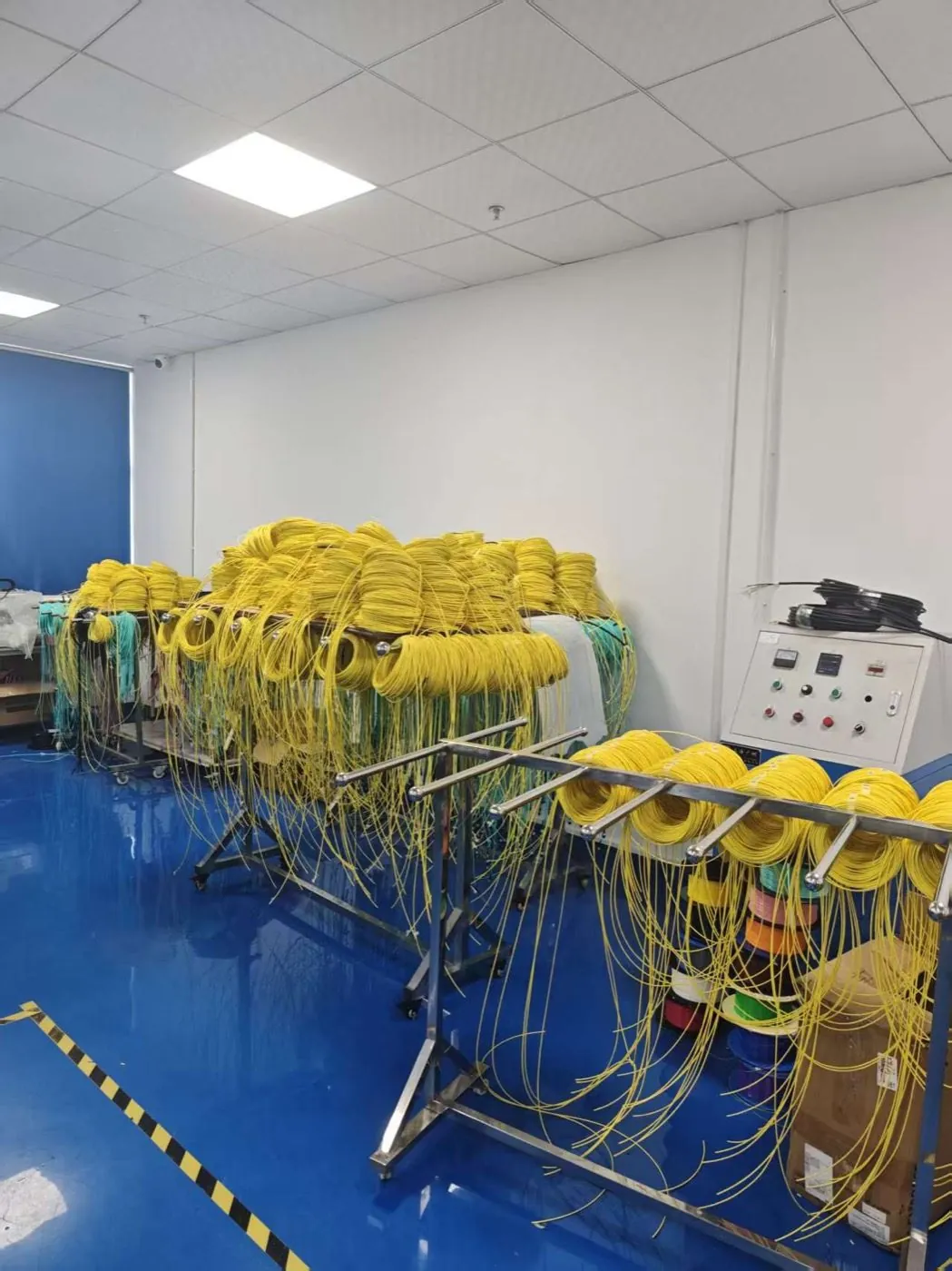
Yellow fiber patch cords hanging on work-in-process racks next to test equipment

Which Jacket to Order by Market and Space

Typical jacket requests by destination (confirm against the project specification)
Destination and spaceTypical requestNotes
USA or Canada, horizontal run on one floorOFNR (or OFNG), PVC or LSZHOFNR is a common default for cords because it also covers riser use
USA or Canada, riser between floorsOFNR or OFNPOFNG is not enough
USA or Canada, plenum or ventilated raised floorOFNP, FT6 for CanadaOnly plenum-listed cable; check whether the AHJ treats the raised floor as a plenum
EU and UK data centers, officesLSZH, with Euroclass of the cable if specifiedPlenum listings are not used in the CPR system
Tunnels, rail, public buildingsLSZH with full IEC 60754 and 61034 resultsOften also a stricter Euroclass for installed cable
Mixed North America and Europe projectState both, for example "OFNR, LSZH"Confirm that one construction carries both, or split into two lines

Jacket color follows the fiber grade (yellow for OS2, aqua for OM3 and OM4, lime for OM5), not the fire rating. Fire rating is read from the print on the jacket, not from color.

Writing the Jacket on an RFQ Line

Put the material and the listing in separate fields, and say which document you need to see. The lines below show the format; they are an example, not a real order.

Example jacket fields on an RFQ (not a real order)
LineExample
US data center, TexasLC/UPC to LC/UPC duplex, OS2, 2.0 mm, jacket OFNR, PVC accepted, yellow, 3 m
Toronto office, ceiling plenumLC/UPC duplex, OM4, jacket OFNP with FT6 marking, aqua, 5 m
Frankfurt colocationLC/UPC uniboot, OS2, LSZH to IEC 60332-1-2, IEC 60754-1/-2 and IEC 61034-2, 2 m
DocumentsListing file or certificate reference for OFNR / OFNP lines; LSZH test reports for the jacket compound
CommercialQuantity per line and required date

Common mistakes are writing "plenum" without checking whether the space really is an air-handling plenum, asking for "LSZH riser" without confirming a listed construction exists, and assuming a cord bought for Europe can be installed in a US riser. The patch cord buying guide covers the other fields on the same line, and our patch cord wholesale and custom patch cord pages list the cord types we quote. Ask for the rating per line; we confirm which jackets and listings are available for each line in the quotation.

FAQ

Patch Cord Jacket FAQ

What is the difference between OFNR and OFNP?

OFNR is the riser listing, tested to UL 1666 for flame spread in a vertical shaft. OFNP is the plenum listing, tested to NFPA 262, which also limits smoke. OFNP can replace OFNR; OFNR cannot be used in a plenum.

Is LSZH better than PVC?

For smoke and corrosive gas, yes: LSZH gives off far less smoke and no halogen acid gas. It is not automatically better for flame spread listings, and PVC cords are widely used where North American riser listings are required.

Can LSZH patch cords be used in a plenum?

Only if the cable is plenum listed (OFNP, or FT6 in Canada) and marked on the jacket. LSZH alone is not a plenum rating.

What does OFNR-LS mean?

A riser-listed nonconductive cable that also passed the smoke limits of the UL 1685 vertical-tray test. The LS (now ST1) suffix is about smoke, not location.

Which jacket should I order for Europe?

LSZH is the usual request. For permanently installed cable the Euroclass under CPR applies; for cords, state whether the cord must be made from cable with a declared Euroclass.

Sources and Further Reading

Standards and public references describe definitions and industry practice; they are not Lumafyn product data. Optical values, MOQ and lead time for your order are confirmed in your quotation and test records.

Related products and guides

Get a Quote