Buyer Guide · Patch Cords

Fiber Optic Patch Cord Buying Guide: Connectors, Fiber, Jacket and RFQ Lines

A fiber optic patch cord is a short cable with a connector on each end, used to link equipment ports, patch panels and cross-connects. Most ordering problems come from fields left open: the polish of each connector, the fiber grade, the jacket rating or the length per line. This guide walks through each choice in the order that avoids rework: interface first, then fiber, then cable construction, then testing, labels and packing.

Published 2026-07-17 · Updated 2026-11-11 · By the Lumafyn Technical Team

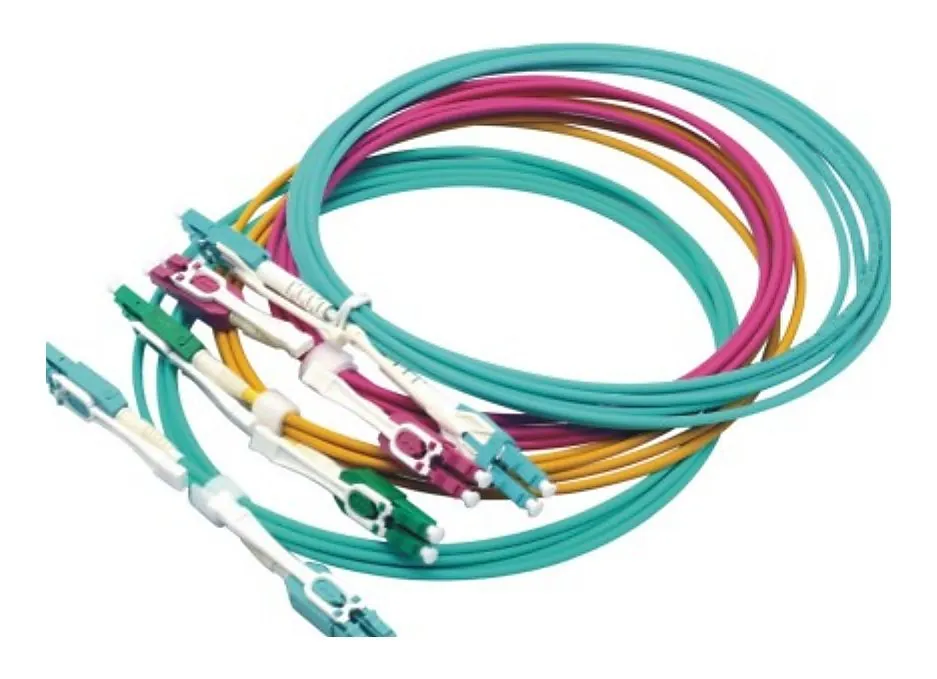
Coiled fiber optic patch cords with duplex connectors

Start With the Interface at Each End

The connector must match the port or adapter it plugs into, and the polish must match the connector it mates with. State both ends, even when they are the same.

Common patch cord connectors
ConnectorFormTypical use
LCSmall form factor, 1.25 mm ferrule, latchSwitches, transceivers, high-density panels
SC2.5 mm ferrule, push-pullFTTH, ODFs, PON equipment, older panels
FC2.5 mm ferrule, threadedTest equipment and some telecom frames
ST2.5 mm ferrule, bayonetLegacy multimode and industrial systems
MTP/MPOMulti-fiber ferruleHigh-density data center links (see the MTP/MPO guides)

Polish. UPC connectors have a flat-domed end face and are usually blue (singlemode) or beige (multimode). APC connectors are polished at an 8° angle to reduce back-reflection and are green. UPC and APC must never be mated: the angled and flat faces leave an air gap that causes high loss and can damage the end faces.

LC uniboot duplex fiber patch cord connectors

Choose the Fiber Grade

Fiber grades and usual jacket colors (TIA-598)
FiberTypical useUsual jacket color
OS2 singlemode (G.652.D)Telecom, FTTH, long data center linksYellow
Bend-insensitive singlemode (G.657.A1/A2)Tight routing in boxes and homesYellow
OM3 multimodeShort data center linksAqua
OM4 multimodeShort data center links with more reach than OM3Aqua, or violet in some markets
OM5 multimodeWideband multimodeLime green

Jacket color is a convention, not a specification. If your site uses colors for something else, such as separating networks, state the color separately from the fiber grade.

Choosing between the two newest multimode grades? Our OM4 vs OM5 patch cord guide compares reach by transceiver and shows when OM5 is worth it. For singlemode bend performance, see G.652.D vs G.657 fiber.

Cable Construction, Jacket Rating and Length

  • Simplex or duplex. Duplex cords carry transmit and receive; state duplex polarity as A-to-B unless your design needs otherwise.
  • Diameter. 3.0 mm and 2.0 mm are common; 1.6 mm or smaller cords save space in dense panels. Uniboot LC cords use one round cable for both fibers.
  • Jacket rating. PVC or LSZH in many markets; OFNR (riser) or OFNP (plenum) where North American codes apply. State the rating the site requires. For EU fire classes, see our CPR Euroclass guide.
  • Armor. A stainless steel tube under the jacket protects cords on exposed routes; see armored vs standard patch cords for when it is worth it.
  • Length and tolerance. One row per length. Add a tolerance if the length is critical, for example in pre-dressed cabinets.
  • Boots and clips. Short boots, push-pull tabs or polarity-reversible LC clips if ports are dense or polarity may change.

Test Values to Request

Ask for insertion loss and return loss per connector, measured at the wavelengths you use. The limits should come from your design or the standard your project follows; the values below are commonly seen on supplier data sheets and are only a starting point for discussion.

Patch cord test items
ItemWhat to ask for
Insertion loss (IL)Per connector, at 1310/1550 nm (singlemode) or 850/1300 nm (multimode)
Return loss (RL)Per connector; APC is chosen where low reflection matters, often specified at 60 dB or better
End-face inspectionPass per IEC 61300-3-35 or your own criteria
PolarityA-to-B check for duplex cords
GeometryInterferometer results if your project specifies them
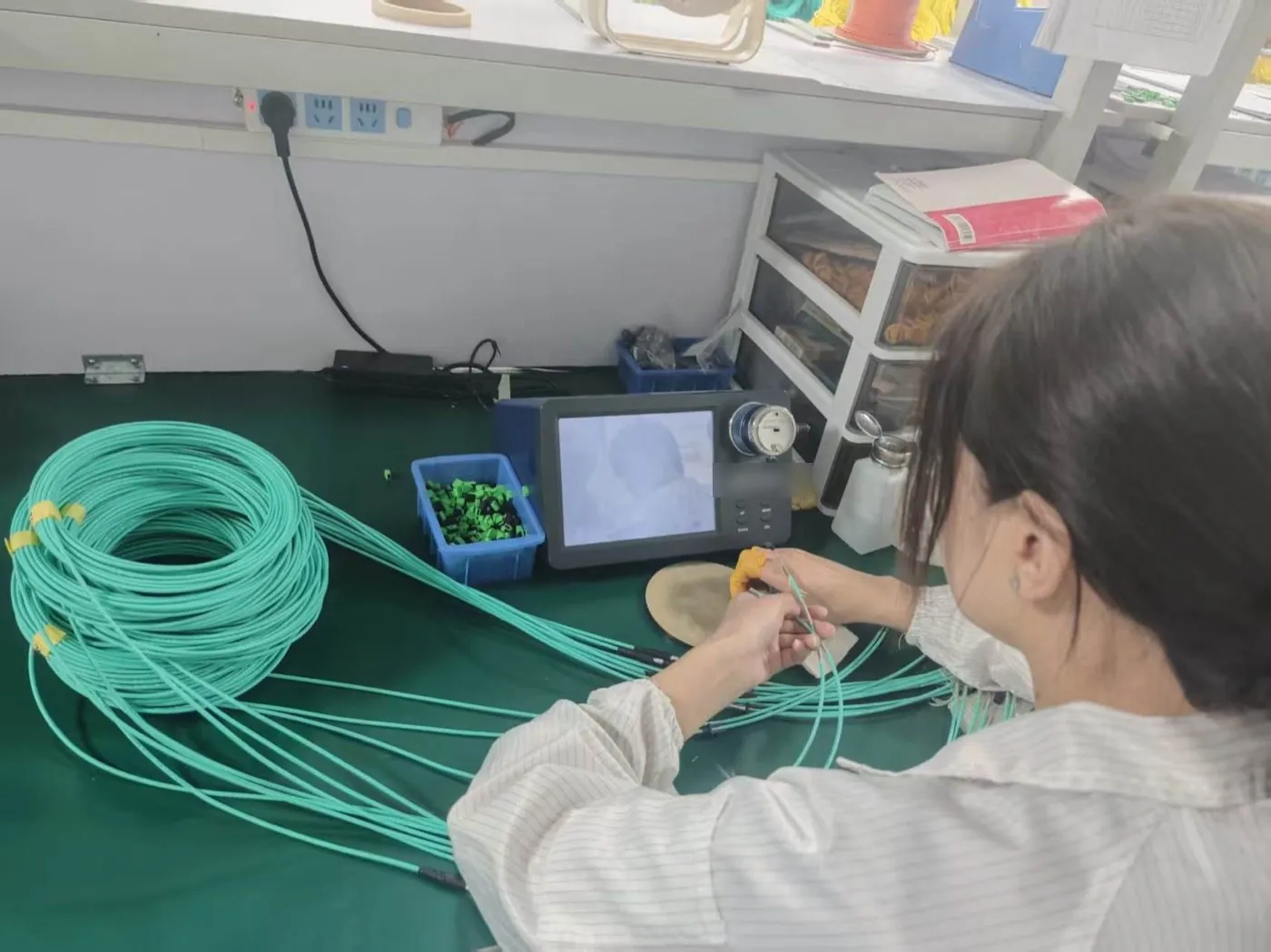
End-face inspection workbench with a fiber microscope in our own factory

A Quote-Ready Patch Cord Line Schedule

Group lines by configuration, not by product name. A line changes whenever any of connector, polish, fiber, diameter, jacket, color, length, label or packing changes.

Patch cord RFQ line format
FieldExample
Line ID and revisionPC-03, Rev A
End A / End BLC/UPC duplex / SC/APC duplex
FiberOS2 G.657.A1
Cable2.0 mm duplex zip, LSZH, yellow
Length3 m ± 5 cm
PolarityA-to-B
Labels and packingBoth-end labels with line ID, individual bag
Quantity and destination500 pcs, Germany

Mark open fields "to be confirmed". If you have an old supplier SKU or sample, send its photo and label along with the line.

Cleaning, Handling and Storage

Most patch cord faults found on site are contamination, not manufacturing defects. A speck of dust on a 9 µm singlemode core can add loss or cause reflections that a link cannot tolerate. Plan for cleaning as part of the purchase:

  • Dust caps on every connector. Ask for caps to stay on through packing and shipment; remove them only at the moment of mating.
  • Inspect before you connect. Use a fiber microscope or probe on both the cord and the port. Clean only when needed, then inspect again.
  • Respect bend radius. Do not coil cords tighter than the cable allows, and avoid sharp bends at the boot.
  • Store cords flat and dry. Keep them in their bags until installation so labels stay readable and jackets stay clean.

Labels and Private-Label Orders

Distributors and installers often need cords that carry their own label, bag print or carton mark. Put these requirements in the first request rather than after the price is agreed: label type, text and position on the cord; bag size and print; carton mark; barcode format; and any line-sheet model numbers. Send an approved artwork or a photo of a previous label when one exists, and say whether the label must survive outdoor exposure or cleaning solvents, because that decides the label material. For larger private-label programs, see our OEM fiber optic service page.

Common Patch Cord Ordering Mistakes

  • Connector without polish. "SC" alone can be UPC or APC.
  • Color as specification. "Aqua cord" does not say OM3 or OM4.
  • One line for many lengths. Quantities by length get lost.
  • Wrong jacket rating. A PVC cord in a plenum space fails inspection.
  • No packing or label rule. Site teams then sort hundreds of identical-looking cords by hand.

FAQ

Fiber Optic Patch Cord FAQ

What is the difference between UPC and APC patch cords?

APC connectors are polished at 8° and are green; they reflect less light back and are used in PON and RF video systems. UPC connectors are flat-domed and usually blue or beige. They must not be mated with each other.

Which fiber optic patch cord do I need for a 10G switch?

Check the transceiver. SR optics use multimode (OM3/OM4) LC duplex cords; LR optics use singlemode OS2 LC duplex cords. The connector is usually LC/UPC.

Does jacket color matter?

Color follows conventions such as yellow for singlemode and aqua for OM3/OM4, but the fiber grade must be specified separately. Some sites use colors to mark networks.

What tests should come with patch cords?

Insertion loss and return loss per connector at the working wavelengths, end-face inspection and, for duplex cords, a polarity check.

What information do you need to quote patch cords?

For each line: both connectors and polish, fiber grade, simplex or duplex, diameter, jacket and color, length, polarity, labels, packing, quantity and destination.

Sources and Further Reading

Standards and public references describe definitions and industry practice; they are not Lumafyn product data. Optical values, MOQ and lead time for your order are confirmed in your quotation and test records.

Related products and guides

Get a Quote