Buyer Guide · Patch Cords

Armored vs Standard Patch Cord: When Is Steel Armor Worth It?

In the armored vs standard patch cord choice, the optics do not change: both use the same fiber and connectors, and an armored cord adds a flexible stainless steel tube under the jacket to resist crushing, kinking and rodents. Choose armored cords for exposed routes such as factory floors, machine cabinets, under-desk runs and areas with rodent risk. Keep standard or uniboot cords for dense racks, where armor adds weight and bulk without a benefit. Because "armored" is not a single specification, ask for crush, tensile and bend values with the test method, as explained below.

Published 2026-11-11 · Updated 2026-11-11 · By the Lumafyn Technical Team

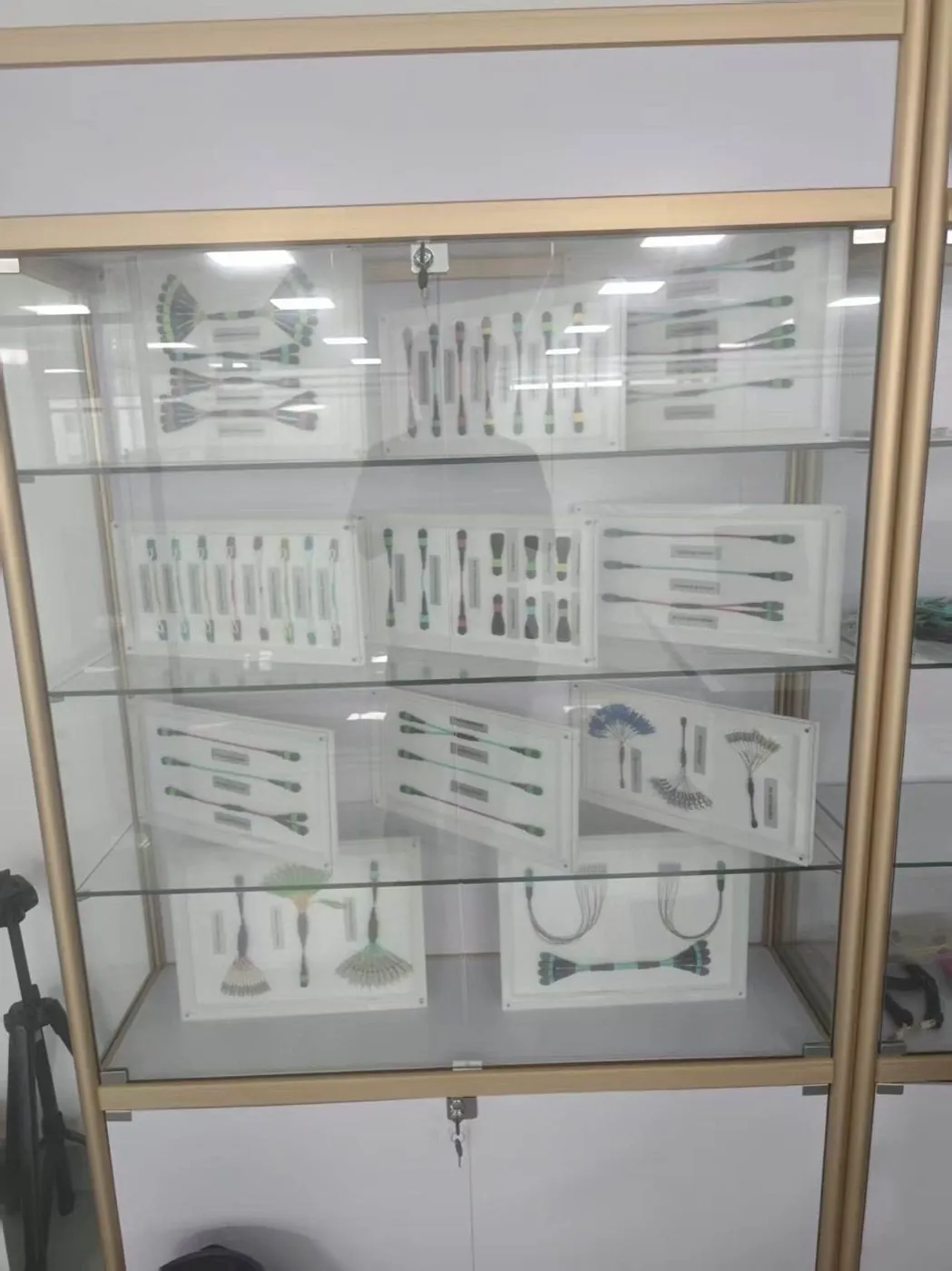
Glass display cabinet holding framed fiber patch cord and cable assembly samples

How an Armored Patch Cord Is Built

A standard simplex or duplex patch cord has a tight-buffered fiber, a layer of aramid yarn for tensile strength and an outer jacket. An armored cord adds a spiral or interlocked stainless steel tube around the buffered fiber, inside the aramid and jacket. Corning describes its armored cords as an interlocked stainless steel tube over a buffered fiber, surrounded by aramid yarn and an outer jacket. Some makers also offer a double-armored version with a steel wire mesh under the outer sheath.

Armored vs standard patch cord construction
PointStandard patch cordArmored patch cord
Fiber and connectorsSameSame
Optical performanceSet by fiber and connectorsSame, when built with the same fiber and connectors
Protection layerAramid yarn and jacketStainless steel tube plus aramid and jacket
Crush and kink resistanceLowHigher; the tube also limits how tightly the cord can be bent
Rodent resistanceLowHigher, not absolute
Weight and stiffnessLight, flexibleHeavier, stiffer
Jacket optionsPVC, LSZH, riser, plenumThe same options are commonly offered

Where Armored Cords Make Sense

  • Industrial automation and machine cabinets. Cords near moving parts, sharp sheet metal or maintenance work.
  • Exposed runs to desks and workstations. Fiber to the desk where chairs, feet and furniture can crush a cord.
  • Under raised floors and in ceiling voids. Routes where other trades work and cords can be stepped on or pinched.
  • Rodent risk. Basements, warehouses and plant rooms where cables have been chewed before.
  • Temporary or event installations. Cords that are laid out, walked over and recoiled repeatedly.

Indoor armored cords are still indoor products. For runs between buildings or in direct sunlight, specify an outdoor-rated cable assembly rather than relying on the armor.

Where Standard or Uniboot Cords Are Better

In a switch rack or patch panel, cords sit in managed pathways and are rarely crushed. Armor there adds weight on the connectors, takes more room in cable managers and makes routing stiffer. Dense patching is usually better served by thin standard cords or LC uniboot patch cords, which reduce bulk at the port. For multimode cords in those racks, the fiber grade matters more than the jacket; see OM4 vs OM5 patch cords.

"Armored" Is Not a Specification: The Numbers to Ask For

We compared public data sheets for armored patch cords from four suppliers (listed in the sources). Where they state long-term crush resistance, the values range from 150 N/100 mm to 3,000 N/100 mm, and the stated minimum bend radius ranges from 5 to 20 times the cable diameter depending on fiber type and whether the cord is static or being moved. Two cords sold under the same name can therefore protect the fiber very differently.

Mechanical values to request for an armored cord
ValueWhat to askTypical test method
Crush resistanceShort- and long-term, in N per 100 mmIEC 60794-1-21, method E3
Tensile loadShort-term (installation) and long-term (installed), in NIEC 60794-1-21, method E1
ImpactWhether tested, and the energy usedIEC 60794-1-21, method E4
Minimum bend radiusStatic and dynamic, as a multiple of diameter or in mmCable data sheet
Outer diameter and weightPer fiber countCable data sheet
Operating temperatureRange for the installed cordCable data sheet

If a supplier cannot give these values with a method, treat the cord as a standard cord with a tougher jacket. The optical tests are the same as for any patch cord: insertion loss and return loss per connector, and end-face inspection.

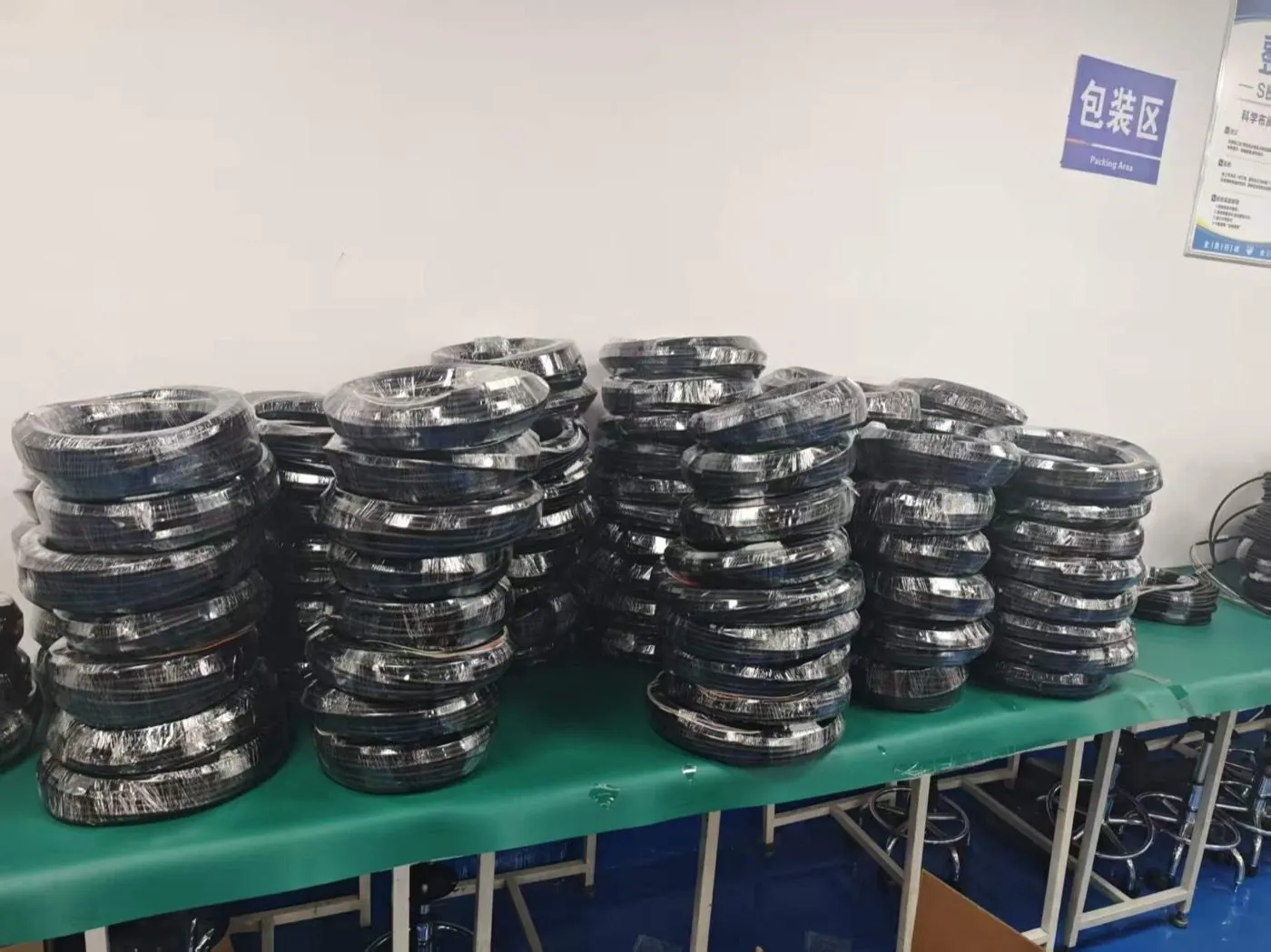
Stacks of coiled black fiber cables tied and packed on a workbench in a packing area

Jacket Ratings and Building Codes

The jacket rating still decides where a cord can be installed: LSZH for many European and Asian projects, riser (OFNR) or plenum (OFNP) listings in North America. The steel tube adds one point to check. The US National Electrical Code (NFPA 70, Article 770) treats an optical fiber cable with metallic armor or other conductive members as a conductive optical fiber cable, a different listing family (OFC, OFCR, OFCP) from nonconductive cables (OFN, OFNR, OFNP). Ask how the armored cord is listed and whether the site requires bonding of metallic members.

For European projects, cords with connectors are generally outside the scope of the Construction Products Regulation, but the cable inside can carry a Euroclass; see our CPR Euroclass guide.

Writing an Armored Cord on an RFQ

Add the construction and the mechanical values to the usual patch cord fields. The lines below are an example of the format, not a real order.

Example armored patch cord RFQ lines
LineExample
AR-01LC/UPC to LC/UPC duplex, OS2 G.657.A1, armored stainless steel tube, 3.0 mm LSZH, 10 m
AR-02SC/APC to SC/APC simplex, OS2, armored, double-armored if available, 25 m
MechanicalCrush, tensile and bend values with test method, per line
TestsInsertion loss and return loss per connector, end-face inspection
CommercialQuantity per line, destination country, required date

Fields not yet decided can be marked "to be confirmed per project". Armored lines are usually quoted as made-to-order assemblies; see custom fiber patch cords and fiber optic patch cord wholesale for the standard fields.

Common Mistakes With Armored Cords

  • Using armor in dense racks. More weight and bulk, no added protection where cords are managed.
  • Assuming armor makes a cord outdoor-rated. The jacket and construction decide that.
  • Ordering "armored" without numbers. Crush values differ by a factor of twenty between products.
  • Bending armored cords to fit. The tube resists tight bends; forcing it can still damage the fiber.
  • Ignoring the listing. Metallic armor can change how a cord is classified under building codes.

FAQ

Armored vs Standard Patch Cord FAQ

Is an armored patch cord slower or lossier than a standard one?

No. With the same fiber and connectors, the optical performance is the same; the armor only adds mechanical protection.

Are armored patch cords rodent-proof?

They are more resistant than standard cords, not proof. In high-risk areas, combine armored cords with protected pathways.

Can I use armored patch cords outdoors?

Only if the cord is built and rated for outdoor use. Most armored patch cords are indoor products with indoor jackets.

Do armored fiber cords need grounding?

Metallic armor makes the cable conductive in the NEC sense. Ask how the cord is listed and follow the site and code requirements for bonding.

What specs should I ask for when buying armored patch cords?

Crush resistance, tensile load and impact with the IEC 60794-1-21 method, static and dynamic bend radius, diameter, weight, jacket rating and the usual optical tests.

Sources and Further Reading

Standards and public references describe definitions and industry practice; they are not Lumafyn product data. Optical values, MOQ and lead time for your order are confirmed in your quotation and test records.

Related products and guides

Get a Quote