Buyer Guide · Data Center

400G/800G Data Center Cabling Guide: From Optics to Fiber Plant, Ready for 1.6T

400G/800G data center cabling starts with the optics, not the cable. Each transceiver type fixes the fiber type, the number of fibers and the connector at the port, and those choices then flow back into trunks, cassettes and panels. This guide maps common 400G and 800G interfaces to their fiber needs, compares parallel and duplex designs, covers AOC and DAC links, explains why loss budgets get tighter, and shows how to write a request that keeps active and passive lines together, with room to move to 1.6T later.

Published 2026-11-10 · Updated 2026-11-10 · By the Lumafyn Technical Team

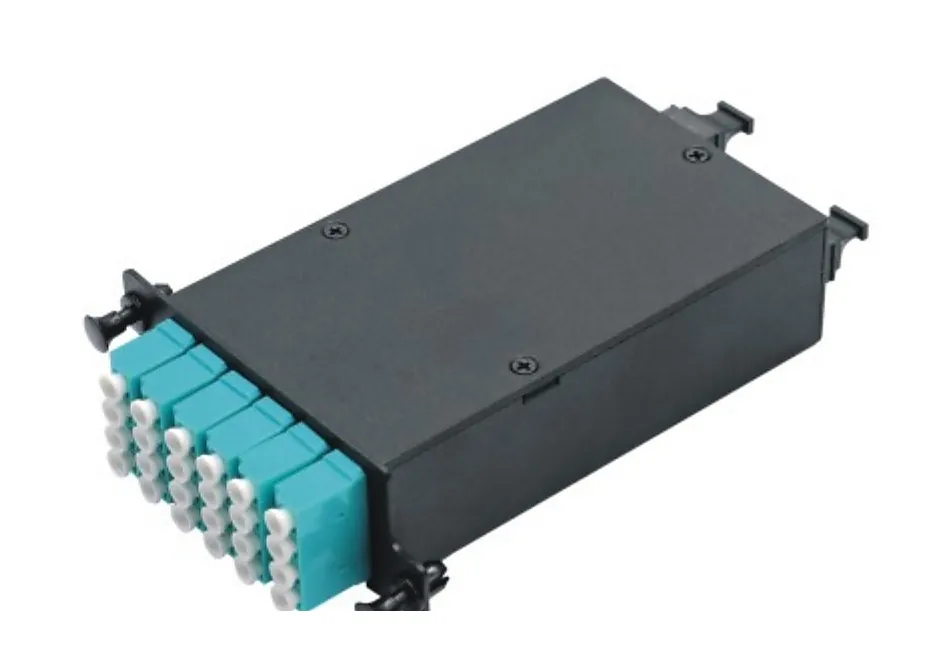
MPO cassette module with aqua LC duplex adapters on the front

Why the Optics Decide the Cabling

At 400G and above, most Ethernet links are built from several lanes. A transceiver can carry those lanes on separate fiber pairs (parallel optics), or combine them on one pair using different wavelengths (duplex optics). The choice fixes the fiber count, the connector at the port and the reach, so it must be known before trunks and panels are ordered.

The interfaces are defined by IEEE 802.3 (for example 802.3bs, 802.3cm and 802.3df) and packaged in form factors such as QSFP-DD and OSFP defined by multi-source agreements. The data sheet of the exact module you plan to use is the reference for connector and fiber details.
Common 400G and 800G Interfaces and Their Fiber Needs

Examples of interface types and cabling impact (confirm against the module data sheet)
Interface exampleFiberFibers per portTypical port connector
400GBASE-SR8Multimode16MPO-16, or two MPO-12 on some modules
400GBASE-SR4.2 (bidirectional)Multimode8MPO-12
400GBASE-DR4Singlemode8MPO-12 APC
400GBASE-FR4 / LR4Singlemode2Duplex LC
800G parallel singlemode (8 lanes, e.g. DR8)Singlemode16MPO-16 APC, or two MPO-12 APC
800G parallel multimode (8 lanes, e.g. SR8)Multimode16MPO-16, or two MPO-12
800G duplex (e.g. 2×FR4 in one module)Singlemode2 × 2Two duplex LC or similar

Two patterns stand out. Parallel singlemode optics such as DR4 and DR8 are often used with breakout, so one 400G or 800G port can feed several lower-speed ports. Duplex singlemode optics keep fiber counts low and suit longer runs. Multimode parallel optics are common for short links inside a hall.

MPO-12 and MPO-16: Planning the Trunk Plant

  • MPO-12 (Base-8 or Base-12). Matches 8-fiber optics such as DR4 and SR4.2 and a large installed base of trunks and cassettes.
  • MPO-16. Matches 16-fiber optics such as SR8 and DR8 directly. MPO-16 connectors are keyed differently from MPO-12 and are not intermateable with them, so panels and cords must be chosen to match.
  • Conversion. Conversion harnesses can join MPO-16 ports to MPO-12 plant, at the cost of an extra mated pair in the channel.
  • Polarity. Parallel optics need lane positions to line up end to end. Follow the polarity method in the design, and see our MTP/MPO polarity guide for trunk types.
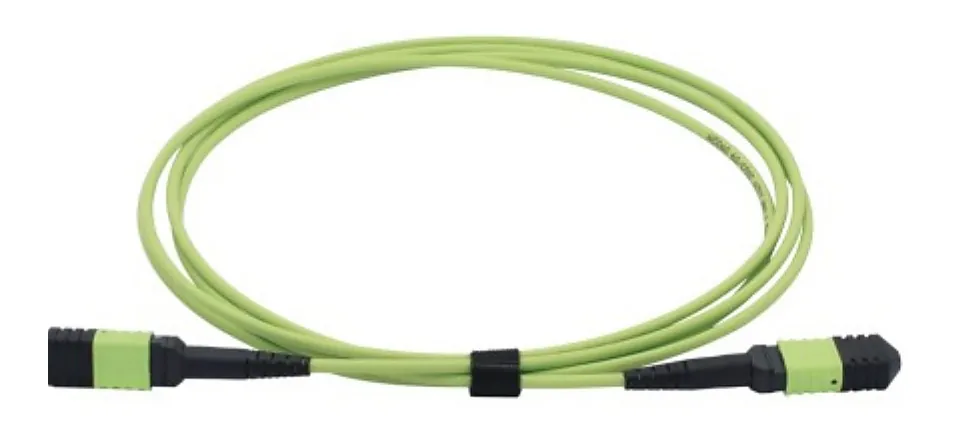
MTP/MPO trunk cable with multi-fiber connectors

Loss Budgets Get Tighter

Higher-speed short-reach optics have small channel insertion loss allowances, and every mated connector pair and splice uses part of that budget. A channel with two cassettes and two patch cords can have four or more mated pairs before reaching the far port.

What to check in the channel
ItemWhy it matters
Number of mated pairsEach pair adds loss; fewer connections leave more margin
Connector loss valuesAsk for maximum and typical values per mated pair, and per-fiber test results
APC vs flat polishSinglemode parallel optics usually need APC; mixing polishes causes high loss
Fiber typeOM4/OM5 multimode or OS2 singlemode must match the optic
CleanlinessMulti-fiber end faces must be inspected on every mating

Run the budget with the loss values from the module data sheet and the measured or specified connector values, not with typical figures alone.

AOC and DAC Links

Not every link needs separate optics and fiber. Direct attach copper (DAC) cables suit very short links within a rack; active optical cables (AOC) carry the signal over fiber with the transceivers built into the cable ends, for longer in-row links. Both are fixed-length assemblies, so lengths must be planned like pre-terminated fiber.

Choosing between DAC, AOC and optics with fiber
OptionTypical useNote
DAC (passive or active copper)Server or switch links within a rackShort reach, cable bulk increases with gauge
AOCRack-to-rack in a rowFixed length, transceiver ends cannot be separated
Transceivers + structured fiberLonger runs, through panels and cassettesMost flexible for moves and upgrades

Planning for 1.6T

Work in IEEE P802.3dj covers 200 Gb/s per lane for 800 Gb/s and 1.6 Tb/s Ethernet. For cabling, the practical lesson is that lane counts and connectors may change again, so a plant built today should be easy to re-terminate at the front without replacing backbone trunks:

  1. Keep trunks generic. Install high-fiber-count trunks between panels and adapt with cassettes or adapter panels at the ends.
  2. Record every fiber. Port maps and polarity records make later changes a configuration task instead of a survey.
  3. Leave space. Panel and tray capacity for additional trunks or MPO-16 adapters.
  4. Choose singlemode where reach is uncertain. Singlemode plant supports a wider range of future optics over longer distances.

A Quote-Ready 400G/800G Cabling BOM

Keep active and passive lines in one BOM, with each line pointing to the lines it connects to.

Example 400G/800G data center cabling lines
LineExample
OPT-01800G module, form factor and interface per host data sheet, quantity
CRD-01MPO-16 APC equipment cord, unpinned, 3 m, connects OPT-01 to PNL-02
TRK-01144-fiber OS2 trunk, MPO-12 APC pinned ends, polarity per drawing, 40 m
CAS-01MPO-12 to LC cassette or adapter panel for PNL-02
AOC-01400G AOC, 10 m, host reference
CommercialLabels per port map, packing by row, destination, BOM revision and date

Interface names, polarity and connector gender are the fields most often left open. Mark any that are not decided as "to be confirmed per project" rather than guessing.

Common Mistakes

  • Speed instead of interface. "800G cable" does not say SR8, DR8 or duplex.
  • MPO-16 into MPO-12 plant. The connectors are not intermateable without conversion.
  • Too many mated pairs. The channel works on paper but exceeds the optic budget.
  • Optics and cabling quoted separately. Mismatches surface only at installation.

FAQ

400G/800G Data Center Cabling FAQ

How many fibers does an 800G link need?

It depends on the optic. Parallel 8-lane optics such as SR8 or DR8 use 16 fibers; duplex designs can use two fibers per 400G half. Check the module data sheet.

Should I install MPO-12 or MPO-16 for 400G/800G?

Use MPO-16 when most ports are 16-fiber parallel optics and the plant is new. Keep MPO-12 where the site already uses it or where 8-fiber optics such as DR4 dominate, and plan conversion where both meet.

Can I use OM4 multimode for 800G?

Yes for short-reach multimode optics designed for it, within their reach limits. Many longer or breakout designs use singlemode.

When is an AOC better than transceivers and fiber?

For fixed rack-to-rack links of known length where flexibility is less important. Structured fiber with transceivers is easier to change later.

How do I prepare 400G/800G data center cabling for 1.6T?

Use high-fiber-count backbone trunks, adapt at the ends with cassettes or adapter panels, keep complete port and polarity records, and leave panel and tray space.

Sources and Further Reading

Standards and public references describe definitions and industry practice; they are not Lumafyn product data. Optical values, MOQ and lead time for your order are confirmed in your quotation and test records.

Related products and guides

Get a Quote