Buyer Guide · Data Center

MTP/MPO Polarity Guide: Trunk Types, Methods and RFQ Details

MTP/MPO polarity is the rule that makes the transmitter at one end of a multi-fiber channel reach the receiver at the other. It is set by three choices that must agree: the trunk type, the adapter type and the patch cords at each end. This guide explains Type A, B and C trunks, the TIA polarity methods, pinned and unpinned plugs, and how to write polarity on a cable request so the assembly is built for the channel you designed.

Published 2026-07-17 · Updated 2026-11-10 · By the Lumafyn Technical Team

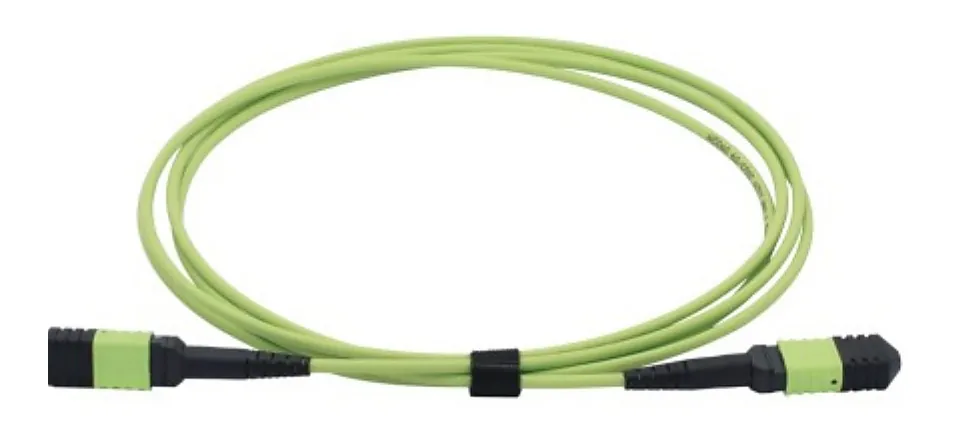
MTP/MPO trunk cable with multi-fiber connectors

Why Polarity Matters in MTP/MPO Channels

Every duplex optical link needs transmit on one end to land on receive at the other. With single LC or SC cords this is handled by an A-to-B crossover in the cord. In an MTP/MPO channel, 8, 12 or more fibers travel in one ferrule through one or more trunks, cassettes and adapters, and each part can either keep the fiber order or reverse it. If the parts are mixed without a plan, the channel is built correctly but does not light up.

Because the fault is invisible until equipment is connected, polarity has to be fixed on paper before cables are ordered. ANSI/TIA-568.3-D describes standard connectivity methods so that designers, installers and suppliers use the same terms.

Type A, B and C Trunk Cables

A trunk type describes how fiber positions map from one end of a cable to the other, and how the connector keys are oriented.

MTP/MPO trunk types (12-fiber example)
Trunk typeFiber mappingKey orientation
Type A (straight)Position 1 to 1, 2 to 2 … 12 to 12Key up on one end, key down on the other
Type B (reversed)Position 1 to 12, 2 to 11 … 12 to 1Key up on both ends
Type C (pair-flipped)Pairs swapped: 1 to 2, 2 to 1, 3 to 4 …Key up on one end, key down on the other

Fiber colors follow the TIA-598 sequence (blue, orange, green, brown, slate, white, red, black, yellow, violet, rose, aqua), which helps when checking a mapping with a visual fault locator.

MTP/MPO branch harness breaking out to LC duplex connectors

Polarity Methods A, B and C

A polarity method is a complete recipe: which trunk, which adapter and which patch cords at each end. For duplex applications that run over MTP/MPO backbones, the three common methods are:

Duplex polarity methods
MethodTrunkAdaptersPatch cords
Method AType AKey up to key downA-to-B cord on one end, A-to-A cord on the other
Method BType BKey up to key upA-to-B cords on both ends
Method CType CKey up to key downA-to-B cords on both ends

Each method works when every part follows it. Problems arise when a channel mixes parts from two methods, for example a Type B trunk with cassettes designed for Method A. When a site already has installed backbone, the new cables should follow the method already in use.

Parallel optics, such as transceivers that use 8 fibers of a 12-fiber MPO interface, connect the trunk fibers directly to the transceiver lanes rather than through duplex cords. The design must then ensure that lane positions line up end to end; follow the parallel connectivity method in the project design or the equipment vendor's cabling note rather than assuming a duplex method carries over.

For 40G and 100G SR4 transceivers, our SR4 MPO polarity guide shows the cord and trunk combinations that work. For the duplex cords used with cassettes, see A-to-B vs A-to-A patch cords.

Pinned and Unpinned Plugs

MTP/MPO plugs are aligned by two guide pins. A pinned (male) plug mates with an unpinned (female) plug through an adapter; two pinned or two unpinned plugs cannot be mated, and forcing them can damage the end face.

  • Transceivers. Parallel-optic transceiver ports are commonly pinned, so the cord that plugs into them is usually unpinned. Confirm this against the equipment data sheet.
  • Trunks and cassettes. A common arrangement is pinned trunks behind panels or inside cassettes, with unpinned patch cords at the front. Your design may differ; state the gender at each end of every line.
  • Polish. Multimode MTP/MPO is usually flat polished; singlemode is often angled (APC). APC and flat-polished plugs must not be mated.

How to State Polarity on an RFQ

Writing "MPO 12F OM4 10 m" leaves the trunk type, gender and polish open. Each MTP/MPO line should carry these fields:

MTP/MPO polarity fields per RFQ line
FieldExample
Line ID and BOM revisionMPO-04, Rev C
Assembly roleTrunk, panel P-02 to panel P-11
Fiber count and mode12 fibers, OM4
End A / End BMTP/MPO, pinned / MTP/MPO, pinned
PolishFlat (multimode)
Trunk type and methodType B, Method B
Connected partsCassette line CAS-02, LC cords line PC-09
Length, labels, quantity15 m, both-end labels per schedule, 24 pcs

If the method is not decided yet, attach the channel drawing and say so. It is better to send an open question than a guess: a wrong trunk type cannot be fixed on site without replacing cords or cassettes.

Checking Polarity Before Installation

  1. Match the paperwork. Check that trunk, cassette and cord lines on the BOM name the same method.
  2. Inspect keys and pins. On receipt, confirm key orientation and gender at both ends against the line schedule.
  3. Trace one channel. Before full installation, connect one complete channel and confirm with a visual fault locator or a polarity tester that position 1 arrives where the design says.
  4. Clean and inspect end faces. Multi-fiber ferrules collect dust across many fibers; inspect each before mating.

Common MTP/MPO Polarity Mistakes

  • Mixing methods. A Type A trunk with Method B adapters and cords will not work without changes.
  • Gender not stated. Two pinned plugs arrive at the same adapter.
  • Polish mismatch. APC singlemode plugs ordered for flat-polished panels.
  • Assuming the old site method. Expansions should be checked against the installed method, not a catalog default.

FAQ

MTP/MPO Polarity FAQ

What is MTP/MPO polarity?

It is the way fiber positions are mapped through trunks, adapters and cords so that each transmitter reaches the correct receiver. TIA-568.3-D defines standard methods to keep the mapping consistent.

What is the difference between Type A, Type B and Type C trunks?

Type A keeps fiber positions straight through (1 to 1) with key up to key down. Type B reverses them (1 to 12) with key up on both ends. Type C swaps adjacent pairs (1 to 2, 2 to 1).

Which polarity method should I use?

Use the method already installed on site, or the one specified in your design. Method B is widely used in new data center builds, but Methods A and C work equally well when all components follow them.

Does a transceiver need a pinned or unpinned cable?

Parallel-optic transceiver ports are commonly pinned, so the connecting cord is usually unpinned. Check the equipment data sheet before ordering.

What polarity information do you need to quote MTP/MPO cables?

For each line: role, fiber count and mode, gender and polish at both ends, trunk type and polarity method or channel drawing, connected parts, length, labels and quantity.

Sources and Further Reading

Standards and public references describe definitions and industry practice; they are not Lumafyn product data. Optical values, MOQ and lead time for your order are confirmed in your quotation and test records.

Related products and guides

Get a Quote