Buyer Guide · Singlemode Fiber

G.652.D vs G.657: Choosing Singlemode Fiber for Cords, Pigtails and Drops

The G.652.D vs G.657 question is mostly about bends. Both are standard 9/125 µm singlemode fibers that work with the same optics and splice together; G.657.A fibers meet the G.652.D requirements and add tight limits on macrobending loss. ITU-T rates G.657.A1 for a minimum design radius of 10 mm and G.657.A2 for 7.5 mm, while G.652.D is only specified at a 30 mm radius. Use G.652.D for backbone cable in ducts and trays, G.657.A1 for most patch cords and pigtails, and G.657.A2 where fiber is coiled tightly in small boxes, wall outlets or indoor drops.

Published 2026-11-11 · Updated 2026-11-11 · By the Lumafyn Technical Team

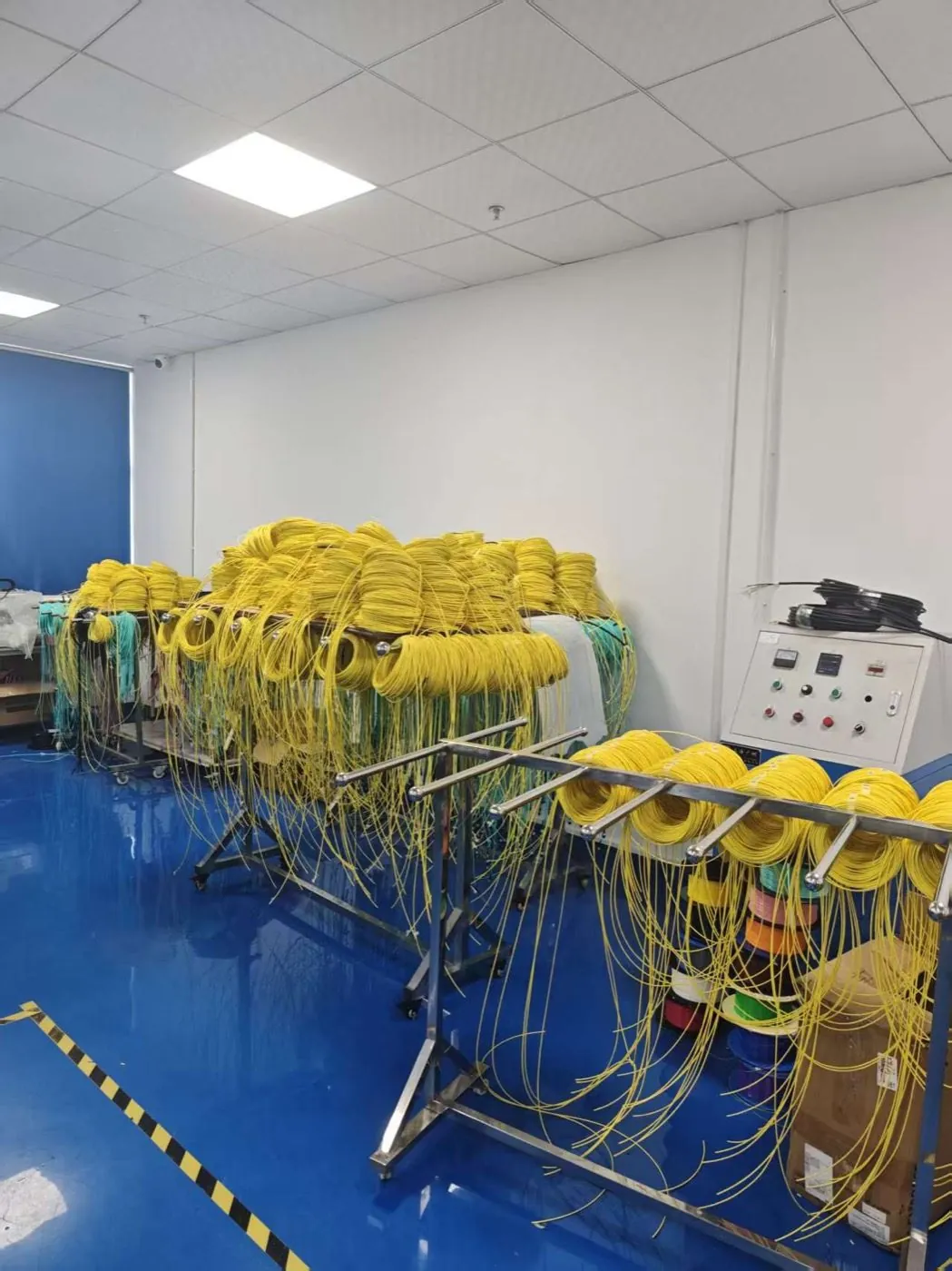
Yellow fiber patch cords hanging on work-in-process racks next to test equipment

What the Two Recommendations Cover

ITU-T G.652 describes the standard singlemode fiber used in most telecom and enterprise networks; category D (G.652.D) is the low-water-peak version that supports transmission across 1260 to 1625 nm. ITU-T G.657 describes bending-loss insensitive singlemode fiber. Its category A (A1 and A2) is written to be fully compliant with G.652.D, so an A1 or A2 fiber can be used wherever G.652.D is specified. Category B (G.657.B3 in the current edition) pushes bend performance further for very small radii; ITU-T describes B fibers as system compatible with G.657.A and G.652.D rather than fully compliant in every attribute.

In the IEC system the same fibers appear as B-652.D and B-657.A1 / A2 / B3 in IEC 60793-2-50. On drawings and RFQs, the ITU-T names are the ones most buyers recognize.
Bend-Loss Limits Side by Side

Uncabled fiber macrobending loss limits (ITU-T G.652 and G.657, 08/2024 editions)
FiberBend radiusTurnsMax. loss at 1550 nmMax. loss at 1625 nm
G.652.D30 mm100Not specified0.1 dB
G.657.A115 mm100.25 dB1.0 dB
G.657.A110 mm10.75 dB1.5 dB
G.657.A215 mm100.03 dB0.1 dB
G.657.A210 mm10.1 dB0.2 dB
G.657.A27.5 mm10.5 dB1.0 dB
G.657.B35 mm10.15 dB0.45 dB

Two points from the standard are worth knowing. First, these are qualification tests on bare fiber wound around a mandrel, not the installation bend radius of a finished cable; a cord or drop cable states its own static and dynamic bend radius on its data sheet, set by the jacket and strength members. Second, ITU-T notes that G.652 fiber bent at a 15 mm radius can lose several dB per 10 turns at 1625 nm. That is the failure G.657 prevents: a cord pushed into a tight cable manager or a fiber coiled too small in a box.

Bend loss is worst at long wavelengths. If your network carries 1625 nm monitoring or L-band signals, or a PON system that uses 1577 nm, look at the 1625 nm column.

What Stays the Same

Shared attributes of G.652.D and G.657.A fibers (ITU-T, 08/2024 editions)
AttributeG.652.DG.657.A1 / A2
Cladding diameter125.0 ± 0.7 µm125.0 ± 0.7 µm
Mode field diameter at 1310 nm8.6 to 9.2 µm, ± 0.4 µm8.6 to 9.2 µm, ± 0.4 µm
Cable cut-off wavelength≤ 1260 nm≤ 1260 nm
Cabled attenuation, 1310 to 1625 nm≤ 0.40 dB/km≤ 0.40 dB/km
Cabled attenuation, 1530 to 1565 nm≤ 0.30 dB/km≤ 0.30 dB/km
Jacket color for singlemode cords (TIA-598)YellowYellow

Because the geometry and mode field ranges match, G.652.D and G.657.A fibers fusion-splice to each other and connect through standard connectors. Small mode field differences between any two singlemode fibers can make a splice look like a gain in one OTDR direction and a larger loss in the other, so measure splices from both ends and average the results.

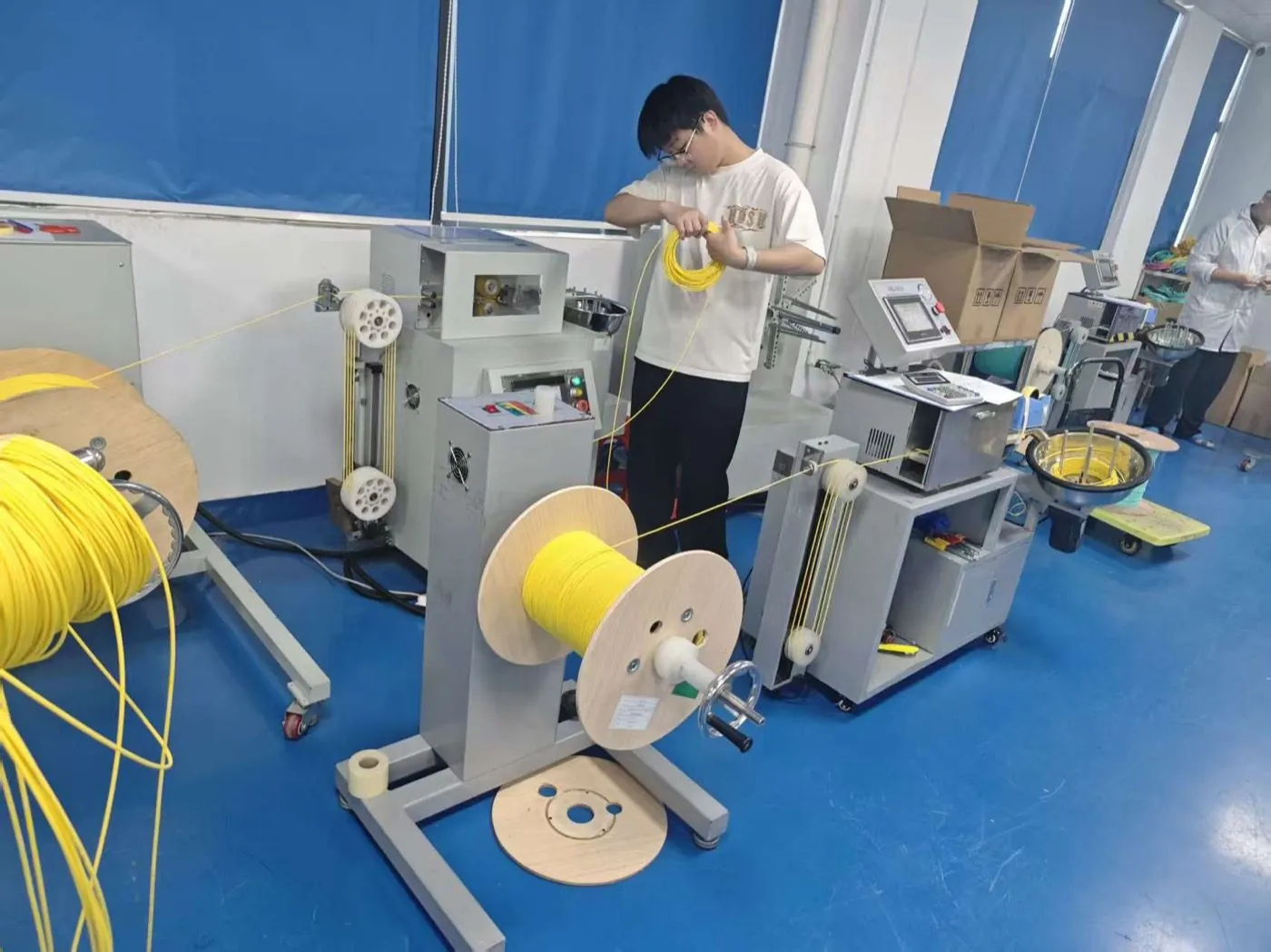
Worker preparing yellow fiber cable from a spool at a cable cutting machine

Which Fiber to Specify, Line by Line

Suggested fiber grade by product (confirm against your project specification)
Product or routeUsual choiceWhy
Outdoor or backbone cable in ducts and traysG.652.DLarge bend radius in the route; lowest cost and widest availability
Patch cords in racks and cable managersG.657.A1Tolerates the bends that happen in real patching
Pigtails in splice trays and ODF modulesG.657.A1, or A2 for small traysCoiled storage close to the minimum radius
Indoor drop cable, wall outlets, small termination boxesG.657.A2Tight corners, stapling and small boxes
Very tight routing inside equipment or customer premisesG.657.B3Designed for a 5 mm minimum radius

Mixing grades in one link is normal. A typical FTTH channel has G.652.D in the feeder cable, G.657.A1 pigtails in the ODF and G.657.A2 in the indoor drop. What matters is that each line on the order names its fiber, so the supplier does not substitute a standard fiber where a bend-insensitive one was expected.

Ask for the fiber grade to be printed on the cord label or the bag label as well, so the fiber that was quoted can be checked on arrival.

Writing the Fiber Grade on an RFQ

"Singlemode" or "OS2" alone does not say whether the fiber is bend-insensitive. OS2 is a cabled-fiber category in ISO/IEC 11801 that both G.652.D and G.657.A fibers can meet. Name the ITU-T recommendation on each line. The lines below are an example of the format, not a real order.

Example singlemode RFQ lines
LineExample
LC-01LC/UPC to LC/UPC duplex, OS2, G.657.A1, 2.0 mm, LSZH yellow, 3 m
PT-01SC/APC pigtail, G.657.A1, 0.9 mm buffer, 1.5 m, 12-color set
DR-01Indoor drop, G.657.A2, SC/APC both ends, 30 m, per drawing
TestsInsertion loss and return loss per connector at 1310 and 1550 nm, end-face inspection
CommercialQuantity per line, destination country, required date

If the grade is not decided, write "G.657.A1 or better, to be confirmed per project". Our fiber pigtail sets and FTTH drop cable pages list the options we quote for those lines.

Common Singlemode Fiber Mistakes

  • Ordering "OS2" and assuming bend-insensitive fiber. OS2 does not say G.657.
  • Treating the mandrel radius as the cable bend radius. Use the cable data sheet for installation.
  • Testing only at 1310 nm. Bend loss shows up at 1550 and 1625 nm first.
  • Specifying B3 everywhere. It is designed for very tight radii; A1 or A2 covers most cords and drops.
  • One-direction OTDR readings on mixed-fiber splices. Average both directions before rejecting a splice.

FAQ

G.652.D vs G.657 FAQ

Is G.657.A1 compatible with G.652.D?

Yes. ITU-T writes G.657.A to be fully compliant with G.652.D, with the same geometry and mode field range, so the fibers splice and connect to each other.

What is the difference between G.657.A1 and G.657.A2?

A1 is rated for a minimum design radius of 10 mm, A2 for 7.5 mm, with lower bend-loss limits. A2 suits tight indoor drops and small boxes; A1 suits most patch cords and pigtails.

Is OS2 the same as G.652.D?

Not exactly. OS2 is a cabled singlemode category in ISO/IEC 11801. Both G.652.D and G.657.A fibers can be used in OS2 cabling, so name the ITU-T grade on orders.

Do G.657 patch cords have higher loss?

No. Straight-line attenuation limits are the same as G.652.D; the difference is lower added loss when the fiber is bent.

Which fiber should I use for FTTH drop cable?

Indoor drops and wall outlets usually use G.657.A2 because of tight corners; aerial or duct drops with gentler routing often use G.657.A1. Follow the operator specification.

Sources and Further Reading

Standards and public references describe definitions and industry practice; they are not Lumafyn product data. Optical values, MOQ and lead time for your order are confirmed in your quotation and test records.

Related products and guides

Get a Quote