Quality Guide

Fiber Optic Quality Control: Checkpoints and Records for B2B Buyers

Fiber optic quality control is the set of checks that show a cable assembly, panel or component matches the order before it leaves the factory. For a buyer, what matters is not a general promise that products are tested, but which checks are done, against which limits, and what record comes back with the shipment. This guide walks through the checkpoints from incoming material to packing, explains the test items for common products, and shows how to write inspection requirements into an order.

Published 2026-07-10 · Updated 2026-11-10 · By the Lumafyn Technical Team

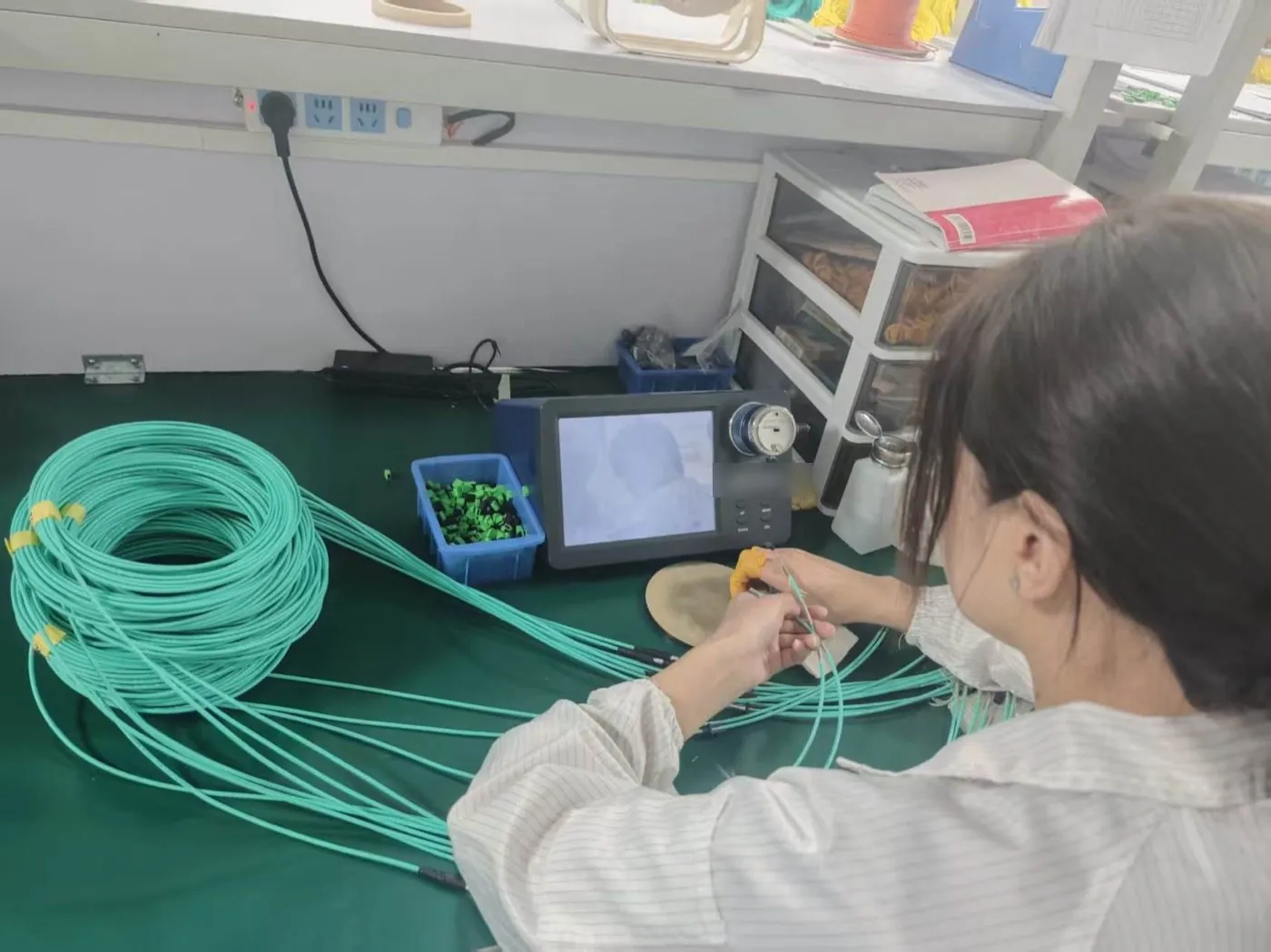
End-face inspection workbench with a fiber microscope in our own factory

Quality Checkpoints from Material to Shipment

Typical checkpoints for fiber optic assemblies
StageWhat is checked
Incoming materialFiber type and print on cable, connector parts, ferrules, housings against the order
TerminationStripping, epoxy and curing or splice quality, according to the work instruction
PolishingPolish type (UPC/APC) and end-face condition
Optical testInsertion loss and return loss at the stated wavelengths
InspectionEnd-face images, geometry where specified, polarity
Final checkLength, labels, color, boot type and packing against the line schedule

Each stage should leave a record that can be linked to the order line. That link is what lets a buyer trace a field problem back to a lot.
End-Face Inspection

Contamination and damage on the connector end face are the most common causes of high loss and reflection. Inspection uses a fiber microscope or video probe and is judged against criteria such as IEC 61300-3-35, which sets zones around the core and limits on scratches and defects in each zone.

  • Ask for the criteria. Name the standard or your own limits in the order.
  • Ask for images on first lots. Sample images make it clear what "pass" looks like.
  • Inspect again on site. A connector can be clean when it leaves the factory and dirty when it is plugged in.

Optical Tests: Insertion Loss and Return Loss

Optical test items
ItemWhat it meansWhat to ask for
Insertion loss (IL)Power lost through a mated connectionValue per connector at each wavelength, and the reference method
Return loss (RL)Light reflected back toward the sourceValue per connector; APC where low reflection is required
Attenuation of cableLoss per kilometer of bulk cableReel test records at 1310/1550 nm
Splitter uniformityDifference between ports of a PLC splitterPer-port loss table

Insertion loss depends on the reference cord and method used. FOA OFSTP-14 and similar procedures describe how to set the reference; ask which one was used so results can be compared with your own field tests.

Geometry, Polarity and Mechanical Checks

  • Interferometer geometry. Radius of curvature, apex offset and fiber height affect physical contact between ferrules. Ask for it where your project specifies it, especially for APC and MTP/MPO assemblies.
  • Polarity. Duplex A-to-B and MTP/MPO trunk types should be checked on every assembly, not only on samples.
  • Mechanical. Pull tests on connectors and boots, and visual checks of jackets and labels.
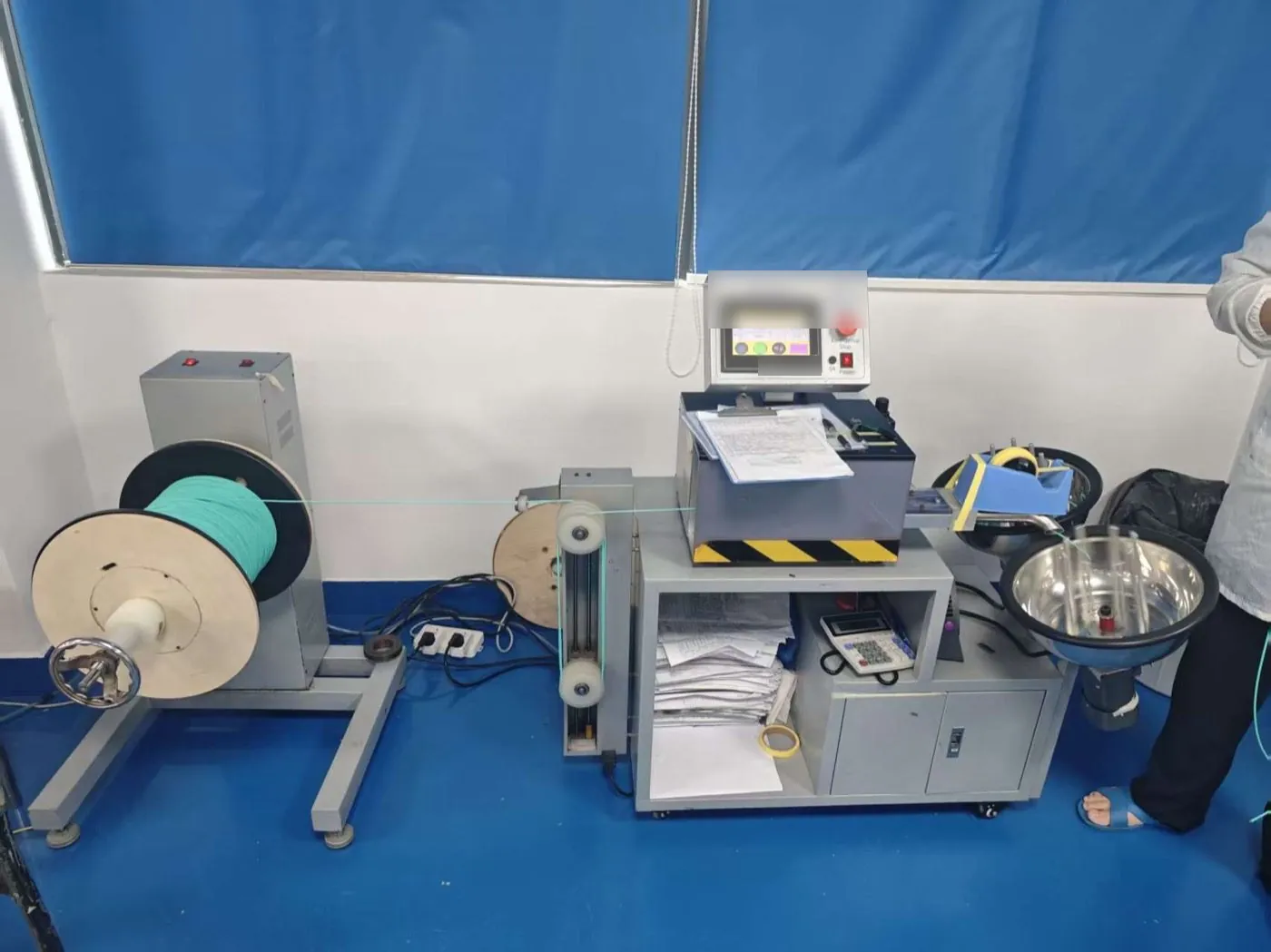
Fiber cable cutting machine workstation in our own factory

Sampling, Lots and Pre-Shipment Inspection

Optical tests on assemblies are normally done on every piece, while visual and dimensional checks are often sampled. If you use sampling, agree the plan in advance; ISO 2859-1 is commonly used to set sample sizes and acceptance numbers by lot size.

  1. Define lots. One lot per line and production run keeps records traceable.
  2. Agree the sample plan. Inspection level and acceptance numbers for each check.
  3. Decide who inspects. Factory records only, a buyer visit, or a third-party inspector before shipment.
  4. Photos and records. Ask for packing photos and test files before the goods are released.

Writing Quality Requirements into the Order

Quality fields to add to an RFQ
FieldExample
Test items and limitsIL and RL per connector at 1310/1550 nm, limits per project specification
Inspection criteriaEnd-face per IEC 61300-3-35
RecordsTest file per line ID, matched to label serial numbers
SamplingVisual and length checks per agreed plan
Pre-shipmentPacking photos and test files before release
Labels and packingLabel text, bag and carton marks per schedule

Requirements written into the order are confirmed before price is fixed, which avoids disputes later. Requirements raised after production has started may change cost and lead time.

What a Good Shipment Record Contains

  • Order number, line IDs and BOM revision
  • Test results per assembly, with serial numbers that match the labels
  • Test wavelength, reference method and equipment used
  • End-face inspection results or images where agreed
  • Packing list matched to cartons and line IDs
  • Any deviations agreed during production, with dates

When Something Fails: Handling Non-Conformance

Even with good controls, some parts will fail a check, in the factory or on site. A clear process agreed in advance turns a dispute into a routine correction:

  1. Report with evidence. Send the line ID, label serial numbers, your test results and photos of the connector end face or label.
  2. Compare methods. Check whether the field test used the same wavelength and reference method as the factory record; many disagreements come from different methods.
  3. Contain the lot. Hold other pieces from the same lot until the cause is known.
  4. Find the cause. The factory reviews the production and test records for that lot and examines returned samples.
  5. Agree the action. Replacement, rework or a change to the process or work instruction, recorded with a date so later lots can be checked against it.

Keep the same line IDs in every message. A report that only says "some cords are bad" takes far longer to resolve than one that names the line, the serial numbers and the test used.

Common Quality Requirement Mistakes

  • "Tested 100%" without items. The record should say what was tested and against which limits.
  • Limits from another product. APC and UPC, singlemode and multimode have different typical values.
  • No link to labels. Results that cannot be matched to a serial number are hard to use.
  • Inspection agreed after shipment. Agree the plan before production starts.

FAQ

Fiber Optic Quality Control FAQ

What does fiber optic quality control include?

Checks on incoming material, termination, polishing, optical tests such as insertion and return loss, end-face inspection, polarity, length, labels and packing, with records linked to each order line.

Which standard is used for end-face inspection?

IEC 61300-3-35 is widely used. It defines inspection zones and limits for scratches and defects. Your project may set its own criteria.

Are all fiber patch cords tested?

Optical tests such as insertion and return loss are usually done on every assembly. Visual and dimensional checks are often sampled. Agree this in the order.

Can I arrange a pre-shipment inspection?

Yes. You can ask for test files and packing photos before release, visit, or appoint a third-party inspector. Agree the plan before production.

What records should come with a shipment?

Test results per assembly with serial numbers, the test method and wavelengths, inspection results where agreed, and a packing list matched to line IDs.

Sources and Further Reading

Standards and public references describe definitions and industry practice; they are not Lumafyn product data. Optical values, MOQ and lead time for your order are confirmed in your quotation and test records.

Related products and guides

Get a Quote