
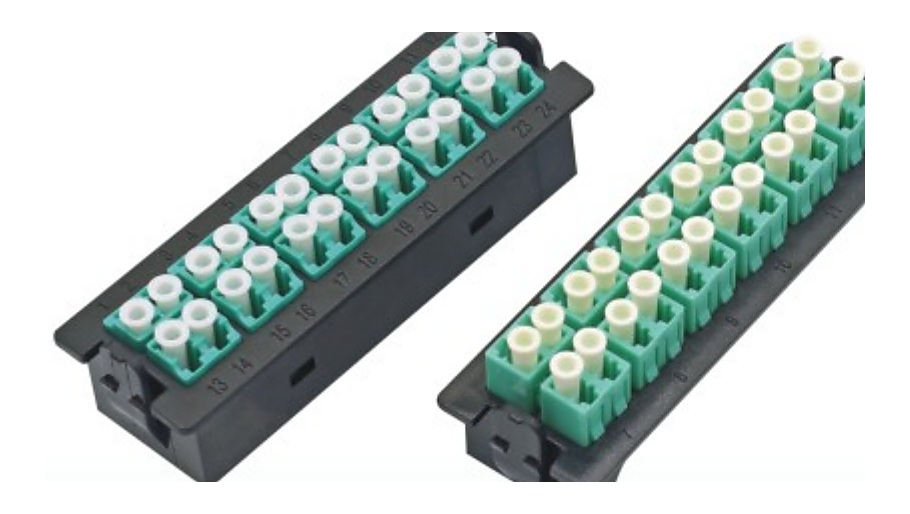
Why the port map belongs in the RFQ
On August 20, 2026, Corning and Zayo described a supply agreement linked to Zayo’s plan to add 15,000 route miles through 2030. The announcement is a public planning signal, not a specification or availability claim for any Lumafyn product. For B2B buyers, the useful lesson is procedural: settle the buyer-controlled hardware and connection records before quote review, rather than leaving a supplier to infer how an ODF, cassette and connected cable assembly should relate.
Corning’s 2026 data-center outlook also frames density and documentation as practical deployment considerations. Translate that signal into a controlled schedule: provide the project’s own panel-position, interface, line-ID and revision references. It does not prove compatibility, performance or a design choice for a particular project.
Build a connected ODF cassette schedule
Keep unlike lines separate
An ODF, adapter, pigtail and fiber assembly can be related without being the same quote line. Retain separate buyer line IDs when the interface, length, fiber, connector, label, packing instruction or governed revision differs. Link them through the port map or BOM only where the buyer intends a connected review.
For high-density cabling, pair the ODF record with the buyer’s MTP/MPO cable assembly endpoint or mapping reference. For termination-side material, record the applicable fiber pigtail and fiber adapter lines separately. This helps a sourcing team evaluate the buyer’s documentation; it does not ask Lumafyn to make network-design decisions.
RFQ checklist
- Panel, enclosure or ODF reference; mounting requirement and quantity.
- Port, position, cassette or module reference from the buyer’s current map or drawing.
- Adapter interface and buyer-supplied related-hardware references.
- Separate pigtail and fiber assembly line IDs with their applicable endpoint or mapping records.
- Labels, packing request, destination country, attachments and current BOM or drawing revision.
FAQ
What should an ODF cassette RFQ include?
Include the buyer-controlled panel or enclosure reference, mounting requirement, port or position reference, module or cassette reference, adapter interface, related pigtail or fiber assembly line IDs, quantities, labels, packing, destination and current drawing or BOM revision.
Why should an ODF port map stay with the fiber assembly request?
A port map lets the buyer identify which panel positions and connected assembly lines belong together. It reduces the risk of asking a quotation team to infer endpoints, routing or mapping from an abbreviated hardware description.
Send a documented ODF request
Lumafyn supports B2B RFQs for ODF and patch panels, MTP/MPO cables, pigtails, adapters and connected passive-fiber lines. Send the buyer-controlled BOM, port map or drawing, quantities, packing request and destination to sales@lumafyn.com or use the contact page.