
Buyer Summary
Data-center planning is increasing the importance of physical density and connected optical paths. That context does not specify an assembly, supplier, topology or compatibility. It does make a disciplined revision record useful for distributors, integrators and contractors comparing a cable assembly BOM before quotation review.
Current Market Signals
Corning reported a June 2026 agreement tied to expanding U.S. data-center infrastructure. This is market context only, not evidence of a Lumafyn relationship, project demand or product specification.
In its 2026 data-center outlook, Corning describes rising fiber density and more interconnected campuses. Buyers should translate any density objective into their own pathway, rack, endpoint and port-map records.
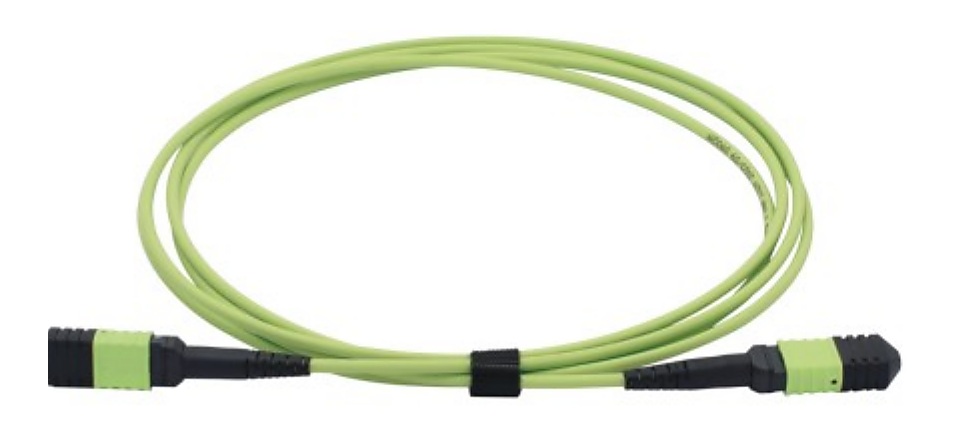
AFL's public MPO assembly page groups data-center wiring, panel/cassette interconnection and breakout use cases. This is a useful vocabulary check: quote requests should state the buyer-defined assembly role and related hardware rather than assume an equivalent configuration.
Revision-Control Checklist for Fiber Assemblies
- Give the RFQ a revision ID and date. Attach the current BOM, drawing or port-map reference and identify which lines changed.
- Keep endpoints explicit. Record the buyer-defined end role, connector and polish details, fiber requirement and any breakout presentation for each changed line.
- Attach the channel record. For multi-fiber paths, provide the applicable buyer-approved mapping, polarity or port-map reference. An MPO/MTP label alone is not a mapping instruction.
- Maintain the physical schedule. List the revised length, quantity, label text, routing or pulling context where relevant, packing request and destination by line item.
- State connected hardware context. Identify buyer-specified panel, cassette, ODF or equipment references only where they affect an assembly end or line role.
Use Existing Guides Before Sending the RFQ
Start with the fiber optic cable assemblies selection guide. For high-density cabling, review the MTP/MPO cable assemblies page, the MTP/MPO buying guide and the MTP/MPO polarity guide. For connected frame hardware, see ODF and patch panels and the data-center fiber cabling solution.
FAQ
What changes require a fiber optic cable assembly RFQ revision?
Update the buyer-controlled record when an endpoint, connector interface, mapping reference, fiber requirement, length, label text, quantity, connected hardware context, packing request or destination changes.
Can an MPO or MTP connector name determine the channel mapping?
No. Send the applicable buyer-approved mapping, polarity or port-map reference rather than asking a supplier to infer it from a connector name.
Where Lumafyn Can Help
Lumafyn can review documented RFQs for fiber optic patch cords, MTP/MPO trunk and harness cables, pigtails, adapters and related passive-fiber items. Send the current buyer-controlled BOM or drawing, quantity, packing request and destination to sales@lumafyn.com or use the contact form.