Buyer Guide · Connectors

APC vs UPC Connectors: Differences, Reflectance and When to Use Each

The difference between APC vs UPC connectors is the shape of the polished end face. A UPC (ultra physical contact) connector has a domed end face square to the fiber; an APC (angled physical contact) connector is polished at an 8° angle, so reflected light leaves the core instead of travelling back to the laser. APC therefore reflects less, which is why it is used on PON, video and other reflection-sensitive singlemode links, while UPC remains the normal choice for duplex Ethernet transceivers. APC is green, UPC is blue, and the two must never be mated to each other.

Published 2026-11-13 · Last reviewed 2026-11-13 · By the Lumafyn Technical Team

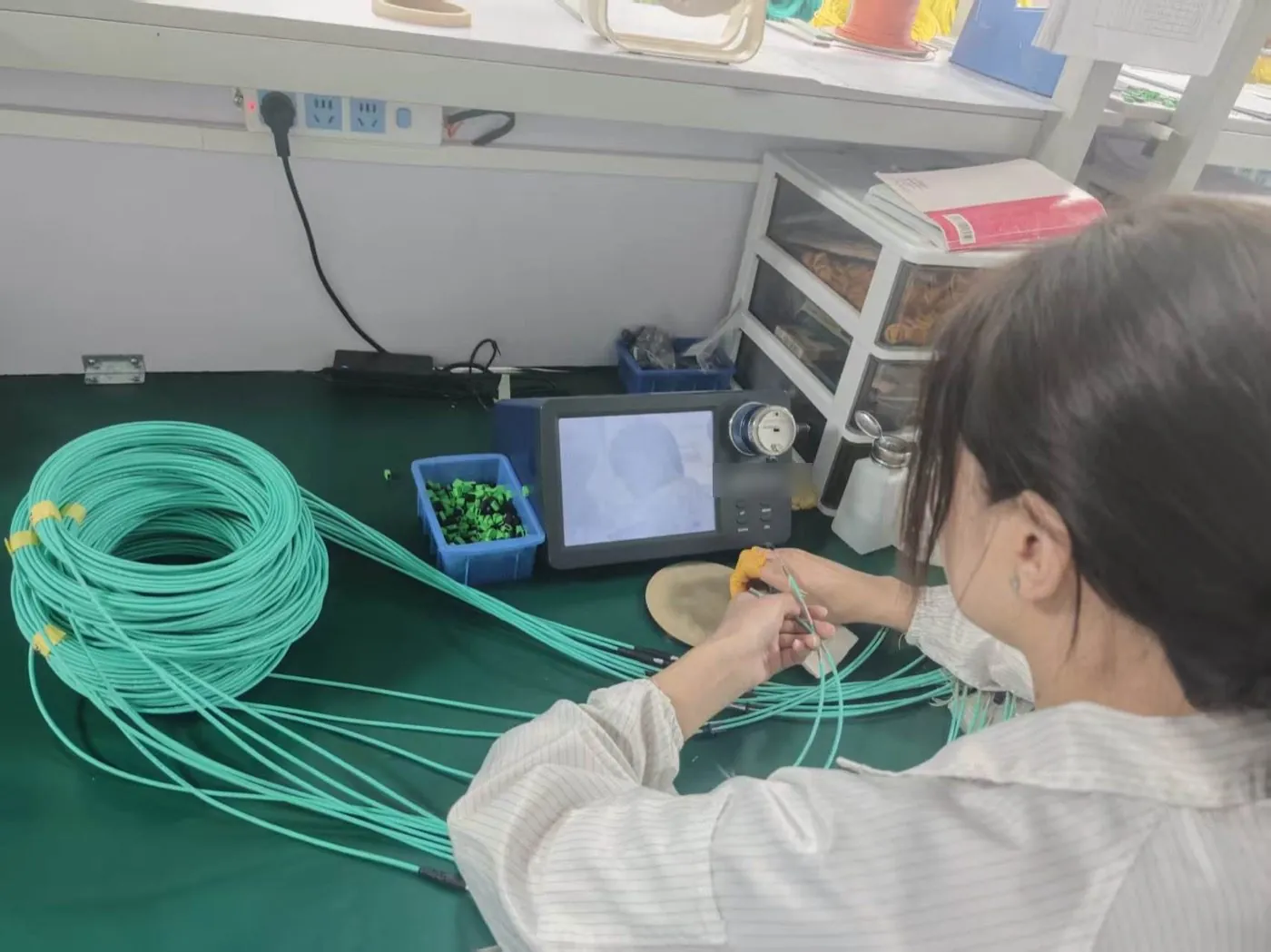
Technician inspecting a fiber connector end face on a video scope at a workbench, next to a tray of green connector parts

APC vs UPC at a Glance

APC and UPC differ in end-face angle, reflectance and colour, and they are not interchangeable. The table summarises the points buyers check most often; each figure links to its public source.

APC vs UPC connector comparison (public reference values, not Lumafyn product data)
PointUPCAPC
End faceDomed, square to the fiber axisDomed and angled at 8°
Typical reflectance-40 to -50 dB-60 dB or better
TIA-568 colourBlue (singlemode)Green (singlemode APC)
Mates withUPC or PC onlyAPC only
Typical usesDuplex Ethernet optics, enterprise and data center LC links, most test cordsPON and FTTH, RF video overlay, WDM and other reflection-sensitive links, singlemode MPO
Fiber typeSinglemode; multimode uses PC or flat polishMainly singlemode; some multimode MPO applications

Insertion loss is not in the table on purpose. Both styles are physical-contact connectors, and the loss limit for an order comes from the specification you buy to, not from the polish name.
How the End Face Changes Reflection

An APC end face reflects less light back to the source because its 8° angle sends the reflected light into the cladding, where it is lost, instead of straight back down the core. The FOA explains that a convex physical-contact polish reduces reflectance to roughly -40 to -50 dB, and that adding the 8° angle on singlemode fiber almost totally prevents it, to about -60 dB.

Reflectance and return loss describe the same thing with opposite signs. In the FOA's words, -50 dB reflectance is 50 dB return loss. A higher return loss number, or a more negative reflectance number, means less light comes back. Test reports and data sheets use both conventions, so read the sign before you compare values. Our guide to reading a patch cord test report shows where return loss appears on a report and which method it should name.

When to Use APC Connectors

Use APC wherever reflected light can disturb the transmitter or the signal: passive optical networks, analog or RF video, WDM systems and high-power singlemode links. The FOA's FTTH reference says that because of all the splitters and short links, and because some systems carry AM video, non-reflective connectors (like the SC-APC angle-polished connector) are generally used in PON networks. A 2005 OFC/NFOEC paper on PON connector performance reached the same conclusion for video overlay: APC connectors are highly recommended.

Fluke Networks lists the same application group: high-power long-haul lasers, links at 1500 nanometers and up, WDM, and RF video over PON. In practice that means:

When UPC Is the Better Choice

UPC is the better choice when the equipment port is UPC, which covers most duplex Ethernet transceivers in enterprise networks and data centers. AddOn Networks advises using UPC connectors unless the transceiver specifically states APC connectors are accepted, and warns that APC plugs in a standard transceiver add loss and risk damage to the optical interface.

UPC also suits short singlemode links between switches where the project sets no tight reflectance limit. If one end of a link is APC and the other is UPC, the answer is a hybrid cord, not a compromise polish. Our OS2 LC to LC patch cords and SC patch cords are quoted in UPC or APC per end.

Never Mate APC to UPC

An APC connector must only be mated to another APC connector, and UPC only to UPC or PC. Fluke Networks states plainly that UPC and APC connectors cannot be mated: the cores do not line up, performance is very poor, and the end faces, including those inside expensive transmitters, can be damaged. The FOA's MPO page adds that angled multimode MPOs, like singlemode ones, are only supposed to be mated to another APC connector.

  • Use the colour code. Green bodies, boots or adapters mark APC; blue marks singlemode UPC.
  • Use hybrid cords to cross over. An SC/APC to LC/UPC cord, for example, connects an APC patch field to a UPC transceiver. Fluke describes using hybrid UPC-to-APC cords when a tester's output port is UPC and the system is APC.
  • Keep adapters matched. Green adapters mark APC ports; a blue adapter in an APC panel invites the wrong cord.
  • Inspect after any suspected mismate. If inspection shows damage that cleaning does not remove, replace the cord.

How to Specify Polish on a Patch Cord Order

Write the polish for each end on every order line, because a cord can be APC on one end and UPC on the other. "SC-LC singlemode" is not enough; "SC/APC to LC/UPC, OS2" is. The lines below show the format and are examples, not real orders.

Example patch cord lines with polish per end (example, not a real order)
LineEnd AEnd BOther fields
Denver, US: FTTH contractorSC/APC simplexSC/APC simplexG.657.A2, jacket per local code, length and quantity per line
Montreal, CA: enterprise campusLC/UPC duplexLC/UPC duplexOS2, A-to-B polarity, OFNR
Lyon, FR: ISP headendSC/APC simplexLC/UPC simplex (hybrid)OS2, LSZH, label both ends "APC" / "UPC"

Return loss and insertion loss limits for each line are agreed in the quotation. Our own factory keeps insertion loss and return loss test records per batch; the values supplied with your order are confirmed when you order. For mixed-connector and custom-length lines, see custom fiber patch cords.

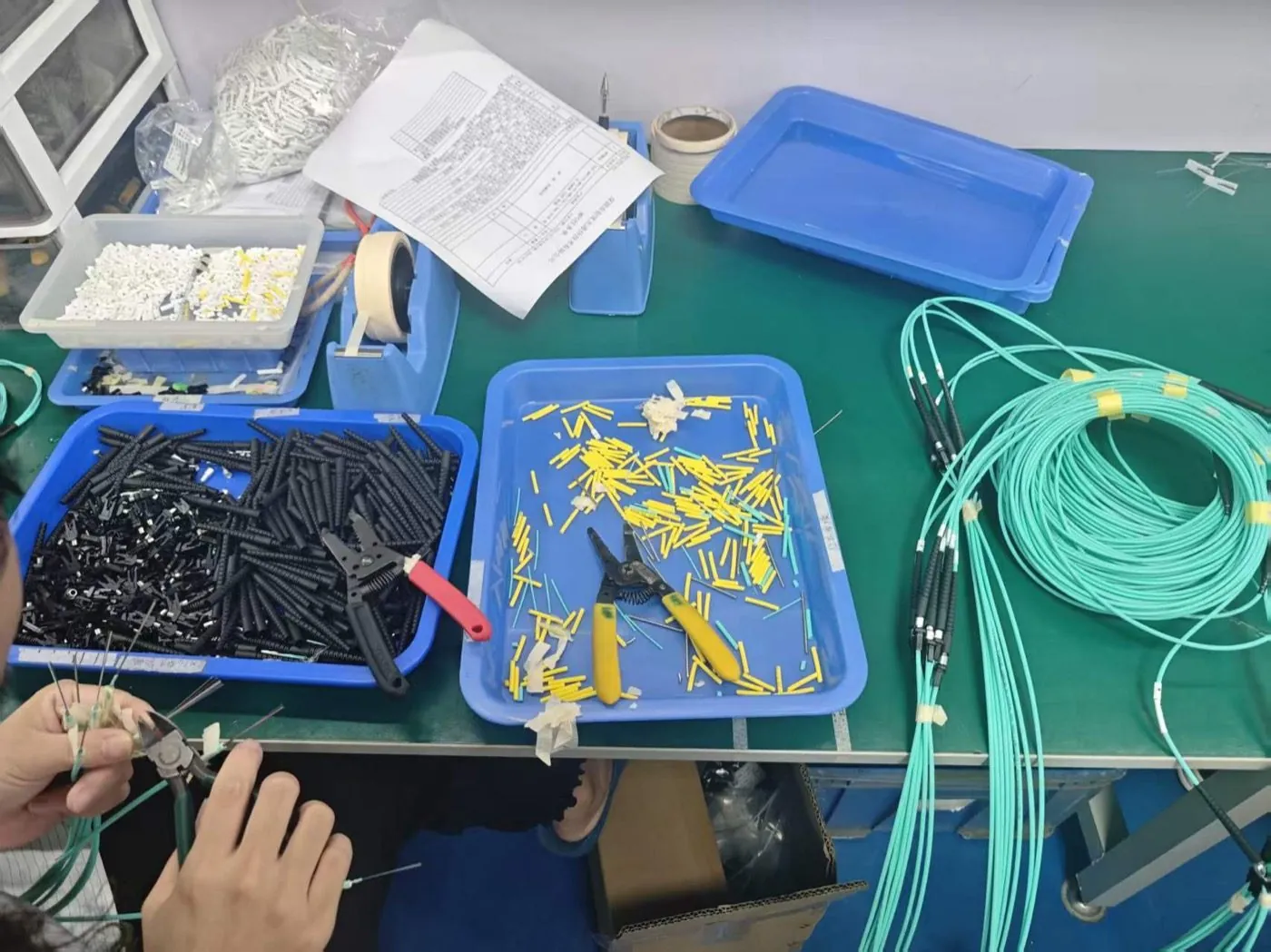
Connector assembly workbench with trays of connector parts, crimp tools and aqua fiber patch cords
Connector assembly in our own factory: polish and connector type are set per order line.

Common APC and UPC Mistakes

Most polish problems come from assumptions on the order or at the patch panel, not from the connectors themselves.

  • Ordering "SC" without a polish. A supplier may default to UPC while your ODF is APC.
  • Choosing APC for transceivers "for better performance". Unless the module says APC, it will not mate correctly.
  • Mixing reference cords. A UPC test cord on an APC link gives meaningless loss readings and can damage the link.
  • Ignoring the MPO angle. Singlemode MPO ends are angled; the FOA notes there is no standard on whether the angle faces toward or away from the key, so check before mating.
  • Comparing values with different signs. -55 dB reflectance and 55 dB return loss are the same result.
  • Expecting a tighter loss budget from APC. The TIA-568 allowance of 0.75 dB per connection quoted by the FOA applies to both polishes; set the limit you need in the order.

FAQ

APC vs UPC FAQ

Can I connect an APC connector to a UPC connector?

No. The angled and domed end faces cannot make full contact, so the joint has high loss and strong reflection, and forcing them together can damage both end faces. Use a hybrid APC-to-UPC patch cord to move between the two.

Which has lower return loss, APC or UPC?

APC reflects less light, so its return loss value in dB is higher. The FOA lists typical reflectance of about -40 to -50 dB for UPC and -60 dB or better for APC.

Why are APC connectors green and UPC connectors blue?

The TIA-568 colour code uses blue connector bodies or boots for singlemode and green for singlemode APC, so the two can be told apart before they are mated.

Is APC better than UPC for data centers?

Not by default. Most duplex Ethernet transceivers have UPC or PC interfaces, so LC/UPC is the usual choice. Singlemode MPO connectors, however, are normally angle polished.

Do I need APC for GPON or XGS-PON?

PON networks generally use APC connectors such as SC/APC because of the splitters, short links and possible video overlay. Follow the operator's specification for each interface.

Sources and Further Reading

Standards and public references describe definitions and industry practice; they are not Lumafyn product data. Optical values, MOQ and lead time for your order are confirmed in your quotation and test records.

Related products and guides

Get a Quote