What Breakout, Harness and Cassette Mean
MPO breakout cables, branch harnesses and cassettes all convert a multifiber MPO/MTP interface into smaller connectors, usually duplex LC or SC. No public cabling standard defines them as three separate products; they are three ways of building that conversion, and suppliers do not all use the same names.
A description of factory-terminated plug-and-play assemblies, published in Lightwave by Donald K. Hall of Corning Cable Systems, still matches how most data-center bills of materials are written:
- Trunk: MPO connectors on both ends, used as the backbone between racks, panels or zones. A trunk is not one of the three options here; it often feeds a cassette or a harness. See MPO/MTP trunk cables.
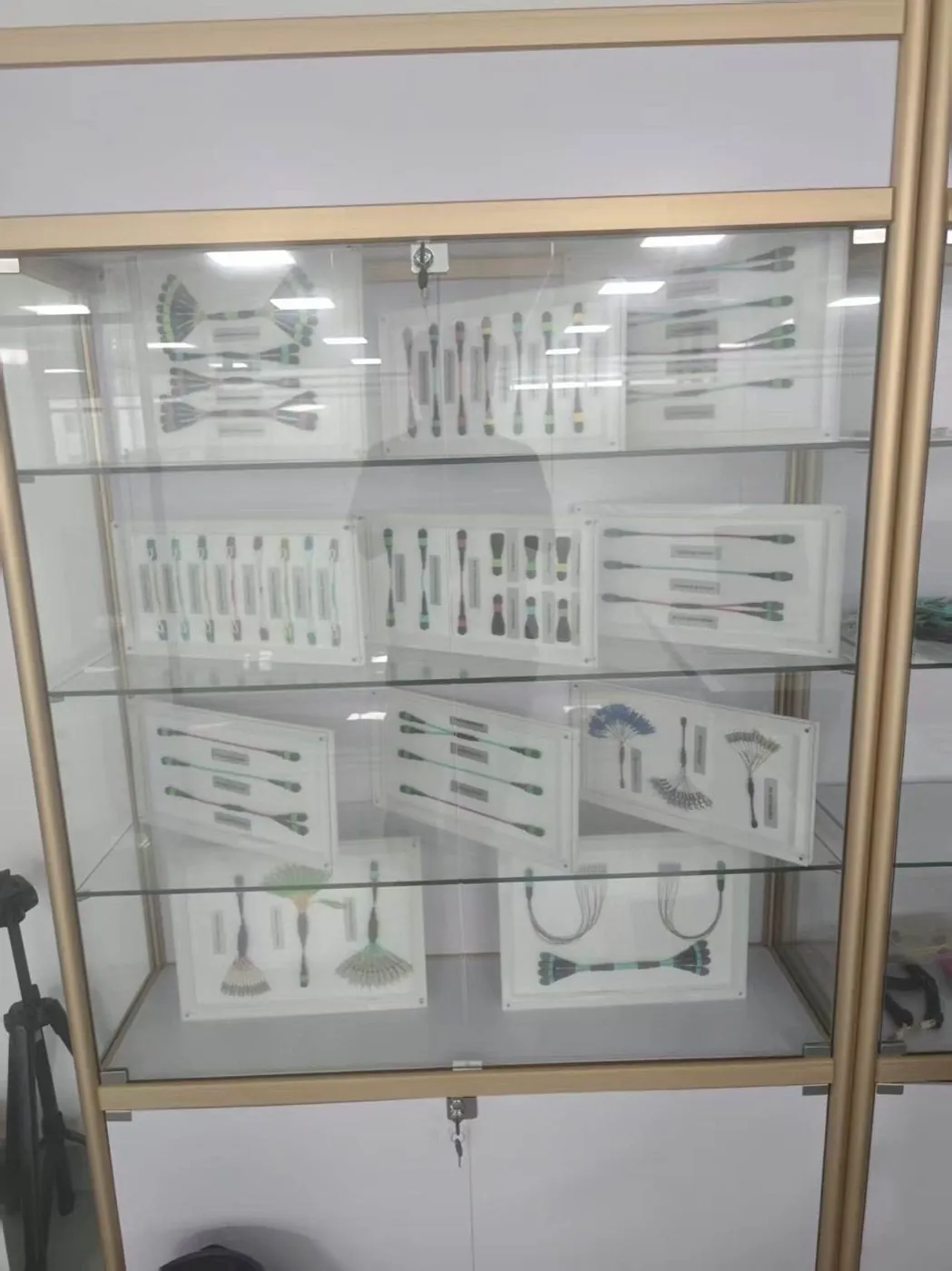
- Harness: a usually short assembly with an MPO on one end and simplex or, more often, duplex connectors on the other. The MPO mates to a trunk or another array port; the duplex ends usually plug straight into equipment, though they can also land in a panel.
- Module or cassette: the same MPO-to-duplex transition, built into a housing that mounts in a patch panel. The MPO is at the rear, where it mates to a trunk. The duplex ports are on the front, for patch cords. Hall also calls these breakout modules or transition modules.
On this site, breakout and fan-out mean the cable form of that transition, especially with individually jacketed legs. A branch harness is the same family, often a short, mapped interconnect to a row of ports, as in the MTP/MPO fiber cables buying guide. Because the names overlap, write where the conversion happens and what the two ends plug into. A conversion harness that changes fiber count or grouping is a different role; keep it on its own line.